Ceiling Materials Guide for New Homes
When building a new home, most people focus on flooring, walls, kitchens, or roofing. However, ceilings are just as important in creating a comfortable, attractive, and functional living space. The right ceiling material not only completes the interior design but also contributes to insulation, acoustics, fire safety, durability, and long-term maintenance.
Today’s homeowners have more choices than ever before. From traditional plasterboard and timber panels to modern metal ceilings and acoustic systems, each material offers different benefits depending on the room, budget, and design style.
Choosing the right ceiling materials early in the building process helps ensure your home is both visually appealing and practical for years to come. This guide explores the most common ceiling materials, their advantages, common applications, and the key factors to consider before making your decision.
Why Ceiling Materials Matter
Ceilings are often called the “fifth wall” because they play a significant role in the overall appearance and performance of a home. While they may not receive as much attention as floors or walls, they influence lighting, room acoustics, energy efficiency, and even the perceived size of a space.
Well-chosen ceiling materials can hide structural components, electrical wiring, plumbing, and air-conditioning systems while creating a clean and polished interior finish.
Ceilings also help improve thermal comfort by working together with roof insulation to reduce heat transfer. In addition, certain ceiling materials offer sound insulation, helping minimise noise between rooms and floors.
A properly selected ceiling system contributes to both the comfort and value of your home.
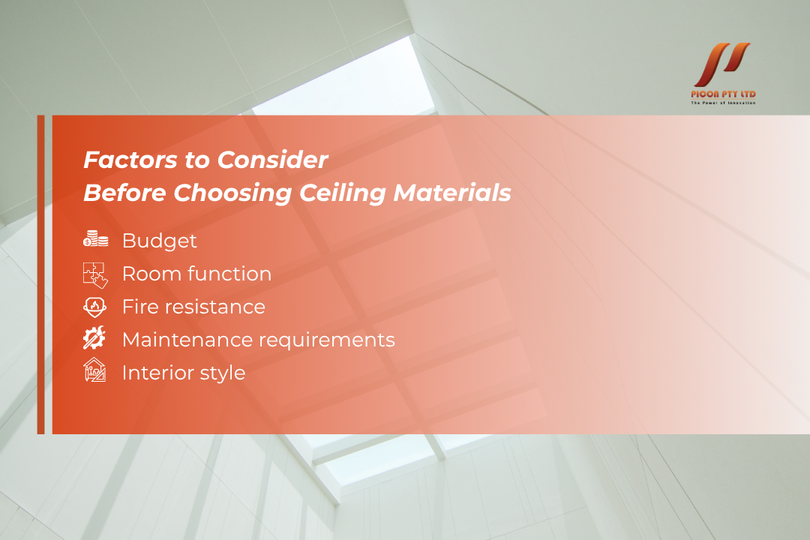
Factors to Consider Before Choosing Ceiling Materials
A complete guide to ceiling materials begins by understanding the factors that influence the best choice for each project.
Budget is often one of the first considerations. Some ceiling finishes are highly affordable, while decorative systems may involve higher material and installation costs.
Room function is equally important. Bathrooms, kitchens, and laundries require moisture-resistant materials, while living areas may prioritise appearance and acoustics.
Fire resistance should also be considered, particularly in garages, multi-storey homes, and areas where building regulations require enhanced fire performance.
Maintenance requirements vary between materials. Some ceilings only need occasional cleaning, while others may require repainting or refinishing over time.
Homeowners should also think about the overall interior style. Modern homes often favour smooth minimalist ceilings, while traditional or luxury homes may incorporate timber panels, decorative mouldings, or feature ceilings.
Finally, always ensure the selected ceiling system complies with local building codes and safety standards.
Plasterboard Ceilings
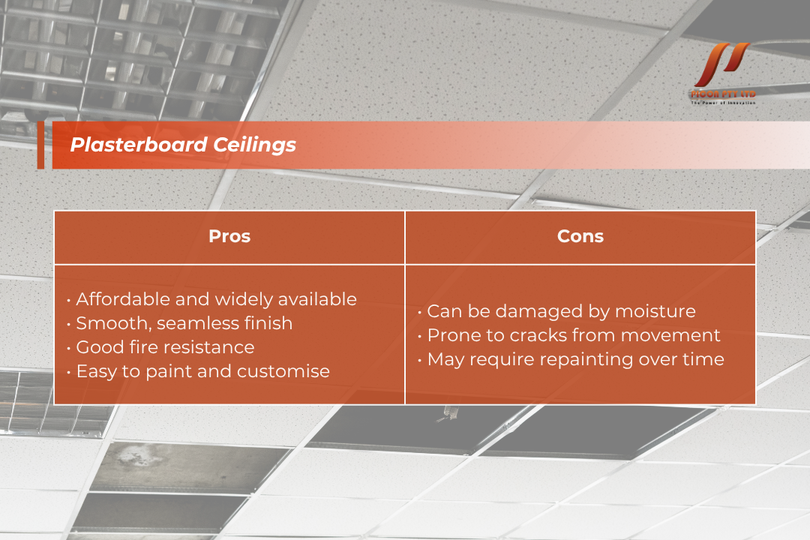
Plasterboard, also known as gypsum board or drywall, is by far the most commonly used ceiling material in residential construction.
It provides a smooth, clean surface that can be painted in almost any colour, making it suitable for nearly every interior design style.
Plasterboard is relatively affordable, easy to install, and readily available. It also offers good fire resistance and can be manufactured in moisture-resistant or acoustic versions for specialised applications.
Because of its versatility, plasterboard is used in living rooms, bedrooms, hallways, kitchens, and many commercial buildings.
With proper installation and finishing, plasterboard creates seamless ceilings that remain attractive for many years.
Suspended Ceiling Systems
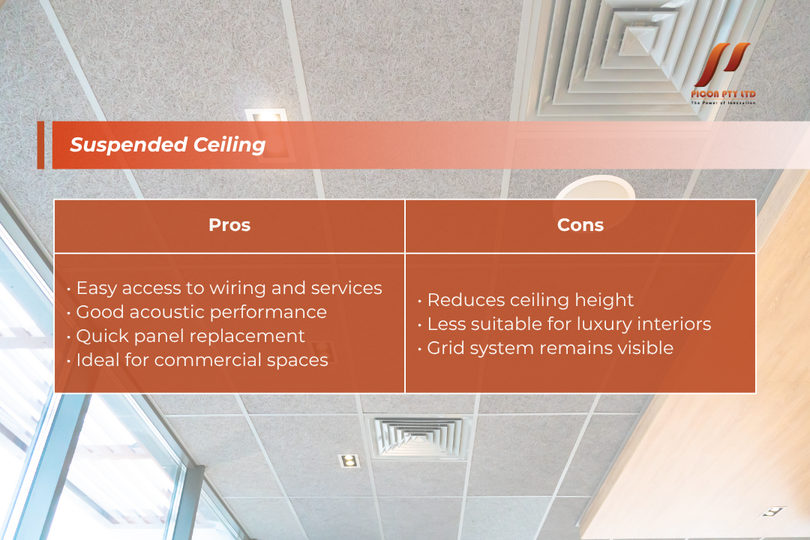
Suspended ceilings, sometimes called drop ceilings, consist of lightweight ceiling panels supported by a metal grid system.
These ceilings are commonly found in commercial buildings but are increasingly used in residential applications such as basements, home theatres, garages, and utility rooms.
One of the biggest advantages is easy access to services hidden above the ceiling, including electrical wiring, plumbing, and air-conditioning systems.
Individual ceiling panels can be removed for maintenance without disturbing the rest of the ceiling.
Suspended ceilings also offer opportunities for improved acoustic performance by incorporating specialised sound-absorbing panels.
Timber Ceiling Panels
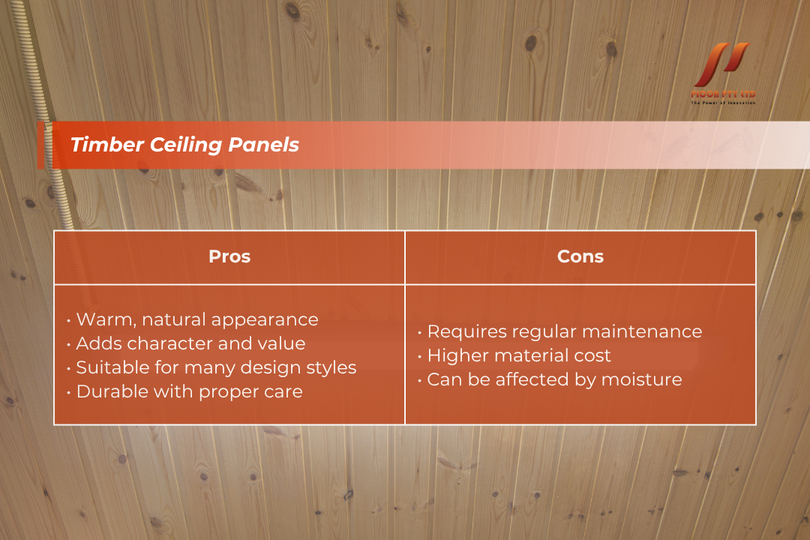
Timber ceilings create warmth, texture, and natural beauty within a home.
Available in solid timber, engineered wood, or decorative veneer finishes, timber panels complement a wide variety of architectural styles, from rustic homes to modern interiors.
Timber ceilings can be installed as full ceiling systems or used as feature panels in selected areas such as living rooms, alfresco spaces, or entryways.
When properly maintained, timber provides long-lasting visual appeal while creating a welcoming atmosphere.
However, timber may require periodic sealing or refinishing depending on environmental conditions and the type of finish used.
Metal Ceilings
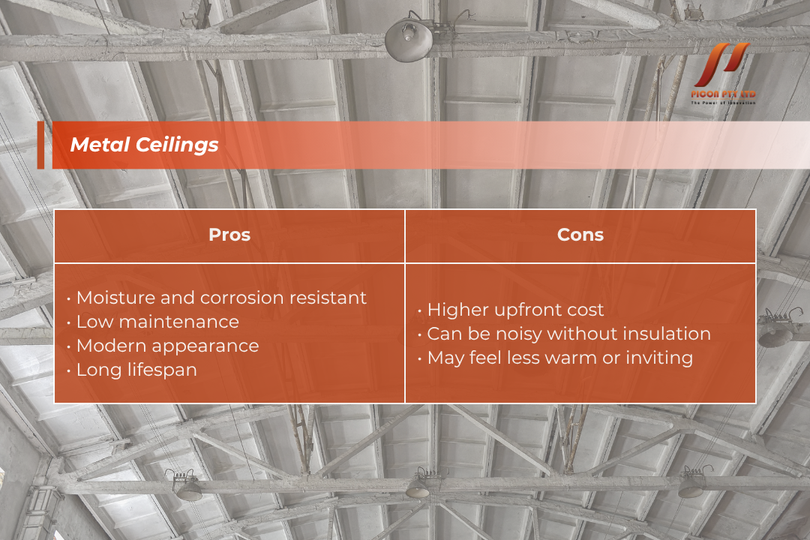
Metal ceilings are becoming increasingly popular in contemporary architecture due to their sleek appearance and durability.
Aluminium and steel ceiling panels offer excellent moisture resistance, making them suitable for kitchens, bathrooms, commercial buildings, and industrial environments.
Metal ceilings require relatively little maintenance and resist mould, insects, and moisture damage.
Many systems are available in perforated designs that improve acoustic performance while maintaining a modern appearance.
Metal ceilings also contribute to sustainable construction because many products contain recycled materials and are fully recyclable at the end of their service life.
PVC Ceiling Panels
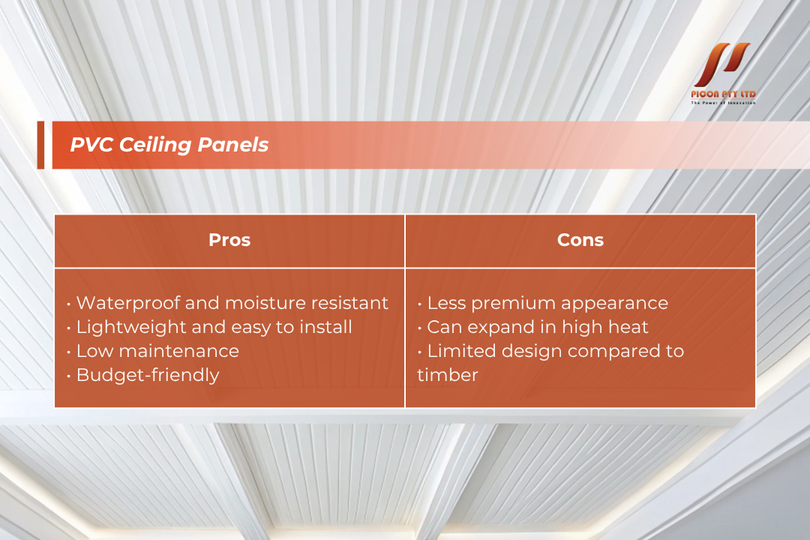
PVC ceiling panels are manufactured from lightweight plastic materials that provide excellent moisture resistance.
They are commonly used in bathrooms, laundries, kitchens, and outdoor covered areas where humidity levels are high.
PVC ceilings require very little maintenance because they do not absorb moisture or require repainting.
Installation is generally quick, and the panels are available in numerous colours and decorative finishes.
Although PVC may not provide the premium appearance of timber or plasterboard, it offers a practical solution for moisture-prone environments.
Acoustic Ceiling Panels
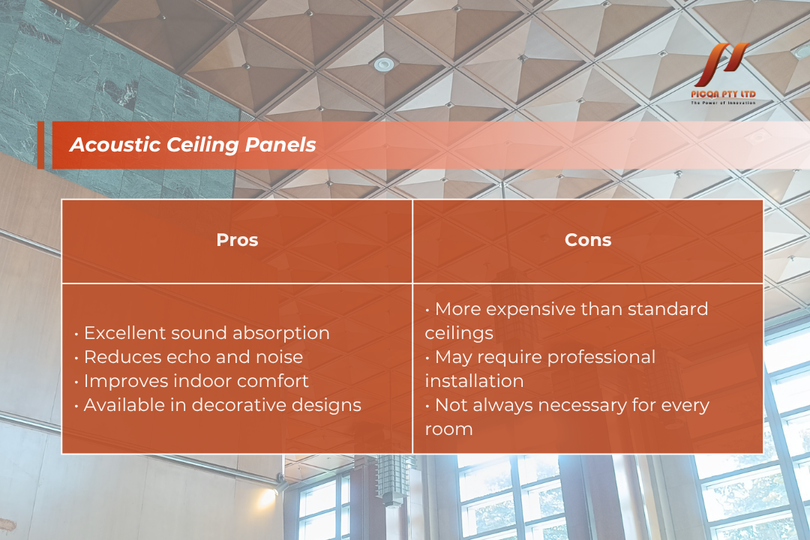
Acoustic ceiling systems are specifically designed to reduce noise and improve sound quality within a room.
These panels absorb sound waves, helping minimise echo and reduce noise transfer between spaces.
Acoustic ceilings are commonly used in home theatres, offices, schools, meeting rooms, and open-plan living areas.
Modern acoustic panels are available in a wide variety of textures, colours, and decorative designs, allowing homeowners to improve both functionality and appearance.
As open-plan homes become more popular, acoustic ceiling materials are increasingly used to create quieter and more comfortable living spaces.
Decorative Ceiling Finishes
Ceilings can also become architectural features rather than simply functional surfaces.
Decorative options include coffered ceilings, tray ceilings, exposed timber beams, decorative mouldings, ceiling roses, and textured finishes.
These features add character, visual interest, and a sense of luxury to living rooms, dining areas, and entrance halls.
Modern lighting systems can also be integrated into decorative ceilings to create dramatic visual effects while improving room ambience.
Choosing decorative ceiling features allows homeowners to personalise their interiors while increasing property appeal.
Energy Efficiency and Ceiling Materials
An important aspect of choosing ceiling materials is understanding their contribution to energy efficiency.
Ceilings work together with roof insulation to reduce heat transfer between the roof space and living areas.
Well-designed ceiling systems help improve indoor comfort while reducing the workload on heating and cooling systems.
Reflective ceiling products and properly insulated ceiling cavities can significantly reduce summer heat gain while helping retain warmth during winter.
Selecting suitable ceiling materials alongside high-quality insulation contributes to lower energy bills and improved year-round comfort.
Read more: Flooring Materials Guide for Every Budget
Fire Safety Considerations
Fire performance is another important factor when selecting ceiling materials.
Plasterboard naturally offers good fire resistance because of the gypsum contained within its core.
Special fire-rated ceiling systems are available for applications where higher fire protection is required.
Metal ceilings are non-combustible and perform well in demanding environments.
Building codes often specify minimum fire resistance requirements depending on the building type and room location, making it important to consult local regulations during design.
Maintenance Requirements
Different ceiling materials require different levels of maintenance.
Painted plasterboard ceilings generally require only occasional repainting after many years.
Timber ceilings may need periodic refinishing to preserve their appearance.
Metal and PVC ceilings usually require only routine cleaning with mild detergents.
Acoustic ceiling panels should be cleaned according to manufacturer recommendations to avoid damaging their sound-absorbing surfaces.
Regular inspections also help identify moisture leaks or structural issues before they cause significant ceiling damage.
Sustainability Considerations
Many homeowners now prioritise environmentally responsible building materials.
Modern plasterboard products often contain recycled content while remaining fully recyclable after removal.
Responsibly sourced timber offers a renewable ceiling material that stores carbon throughout its service life.
Metal ceiling systems frequently contain recycled aluminium or steel while remaining recyclable indefinitely.
Choosing durable ceiling materials that require minimal replacement contributes to more sustainable building practices over the long term.
Choosing the Right Ceiling Material
Every home has different design goals and functional requirements.
Plasterboard remains the most popular choice for general residential construction because of its affordability, versatility, and clean appearance.
Timber ceilings suit homeowners looking for warmth and natural character.
Metal and PVC provide excellent performance in moisture-prone environments, while acoustic ceilings improve comfort in noisy spaces.
Decorative ceiling systems allow homeowners to create unique architectural features that reflect their personal style.
The best ceiling material depends on your budget, room function, maintenance expectations, design preferences, and local building requirements.
Working with experienced builders and material suppliers helps ensure you choose products that deliver both long-term performance and visual appeal.
Final Thoughts
Choosing the right ceiling materials is an important part of creating a comfortable, durable, and attractive home. From traditional plasterboard and natural timber to modern metal, PVC, and acoustic systems, each ceiling material offers unique benefits depending on your project’s requirements.
By understanding how different ceiling materials perform in terms of durability, moisture resistance, fire safety, maintenance, and energy efficiency, homeowners can make informed decisions that improve both comfort and long-term value.
Whether you’re building a new home or renovating an existing one, investing in quality ceiling materials and professional installation will help create interior spaces that remain beautiful and functional for many years to come.
Complete Your Home with Quality Ceiling Materials from Picon
The right ceiling system enhances comfort, improves energy efficiency, and completes the look of your home. At Picon, we supply high-quality building materials for residential and commercial construction, helping builders, contractors, and homeowners choose reliable products that combine durability with modern design.
Whether you’re planning a new build or renovating an existing property, our experienced team can help you find the right ceiling materials for your project. Contact Picon today to learn more about our building material solutions and how we can support your next construction project.