Sustainable Building Materials Guide for Eco-Friendly Homes
Building an eco-friendly home is no longer just about adding solar panels or choosing energy-efficient appliances. The materials used to construct the home also have a major impact on energy use, environmental performance, indoor comfort, maintenance, and long-term durability.
This is why sustainable building materials are becoming increasingly important in modern residential construction.
Sustainable materials are designed or selected to reduce environmental impact throughout their life cycle. This can include how raw materials are sourced, how much energy is used during manufacturing, how far products are transported, how long they last, whether they improve building efficiency, and whether they can be reused or recycled in the future.
For homeowners, builders, and developers, choosing sustainable building materials does not necessarily mean sacrificing strength, appearance, or performance. In many cases, these materials offer excellent durability, lower maintenance requirements, better thermal performance, and more efficient use of natural resources.
This guide explores some of the most common sustainable building materials used in eco-friendly homes and explains what to consider when choosing materials for a greener building project.
What Are Sustainable Building Materials?
Sustainable building materials are materials that aim to reduce negative environmental impacts while supporting safe, durable, and efficient construction.
A material may be considered sustainable for several different reasons.
Some products are manufactured from renewable resources, such as responsibly sourced timber. Others contain recycled content, such as recycled steel, aluminium, glass, or plastic. Some materials require less energy to manufacture, while others improve the energy efficiency of the finished building.
Durability is also an important part of sustainability. A product that lasts for decades and requires little maintenance may have a lower long-term environmental impact than a cheaper product that needs to be replaced frequently.
Transport is another factor. Locally sourced materials can reduce the emissions associated with long-distance delivery.
There is no single feature that makes a construction material completely sustainable. Instead, materials should be considered across their entire life cycle.
Why Sustainable Building Materials Matter
The construction industry uses large amounts of raw materials, energy, and water. It also produces significant quantities of waste during manufacturing, construction, renovation, and demolition.
Choosing more sustainable materials can help reduce this impact.
For eco-friendly homes, material selection also influences energy efficiency. High-performance insulation, efficient windows, suitable roofing, and thermally effective wall systems can help reduce heating and cooling demand.
Lower energy consumption can reduce household running costs while improving indoor comfort.
Sustainable materials may also contribute to healthier indoor environments. Products with low levels of volatile organic compounds, or VOCs, can help reduce indoor chemical emissions from paints, adhesives, flooring, and finishes.
For homeowners, sustainability can therefore provide practical benefits as well as environmental ones.
Responsibly Sourced Timber
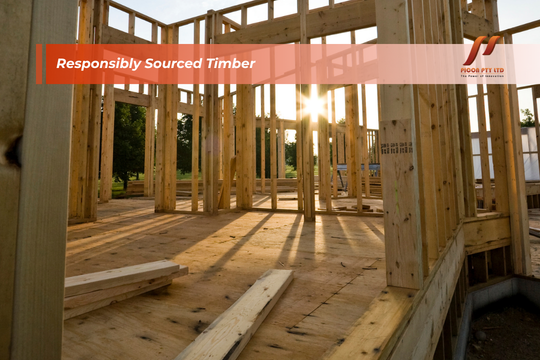
Timber is one of the most widely used natural construction materials and can be a highly sustainable choice when sourced responsibly.
Trees absorb carbon dioxide as they grow, and some of this carbon remains stored within timber products throughout their useful life.
Timber is also renewable when forests are managed responsibly and harvested at sustainable rates.
It is commonly used for structural framing, flooring, wall cladding, decking, joinery, roofing components, doors, and interior finishes.
Certification systems can help identify timber sourced from responsibly managed forests. Homeowners and builders should check the origin of timber products rather than assuming all wood is equally sustainable.
Durability must also be considered. The right timber species, treatment, coating, and installation method should be selected for the intended environment.
Timber that fails prematurely due to moisture, termites, or incorrect detailing is less sustainable because it requires repair or replacement.
When properly selected and maintained, timber can provide excellent structural performance, natural beauty, and a relatively low environmental impact.
Recycled Steel
Steel is widely used in structural framing, roofing, wall systems, reinforcement, beams, columns, and many other building components.
One of its biggest environmental advantages is recyclability.
Steel can be recycled repeatedly while maintaining its useful material properties. Many steel products already contain recycled material from previous buildings, vehicles, machinery, and industrial applications.
Light-gauge steel framing can also support efficient construction because components are manufactured to accurate dimensions, reducing cutting and waste on site.
Steel is durable, termite resistant, and non-combustible. These characteristics can contribute to a long service life and reduce maintenance requirements.
However, steel manufacturing requires significant energy. Its overall sustainability depends partly on recycled content, manufacturing methods, transport distances, and the energy sources used during production.
Choosing high-quality steel products with a long service life can help improve their environmental value over time.
Recycled and Low-Carbon Concrete
Concrete is essential to modern construction, but traditional cement production is associated with significant carbon emissions.
For this reason, manufacturers and builders are increasingly exploring lower-carbon concrete mixtures.
These products may replace a portion of traditional cement with supplementary materials such as fly ash, slag, or other processed industrial by-products.
Recycled aggregates from demolished concrete may also be used in selected applications.
Lower-carbon concrete can still provide the strength and durability required for slabs, foundations, walls, and structural elements when properly designed.
Long service life is an important sustainability advantage of concrete. A well-designed structure can remain in use for many decades.
Concrete also provides thermal mass, which can help stabilise indoor temperatures by absorbing and releasing heat gradually.
When used as part of a well-designed passive home, this can reduce heating and cooling demand.
Recycled Bricks
Bricks are among the most durable building materials available, and reclaimed bricks provide an opportunity to reuse existing construction products rather than manufacture new ones.
Recycled bricks can be sourced from demolition projects and cleaned for reuse in new walls, landscaping, pathways, and architectural features.
Their weathered appearance is also attractive for heritage, industrial, and rustic designs.
Reusing bricks helps reduce demolition waste while extending the service life of an existing material.
However, reclaimed bricks must be inspected carefully. Cracked, heavily damaged, or unsuitable bricks may not provide the required structural performance.
For structural applications, the bricks and mortar system should be selected according to engineering and building requirements.
Even when reused only for decorative applications, recycled bricks can add character while reducing demand for new materials.
Recycled Aluminium
Aluminium is used extensively for window frames, doors, roofing components, cladding, flashings, screens, and decorative elements.
Producing aluminium from raw materials requires substantial energy, but recycling aluminium requires significantly less energy than primary production.
Because aluminium can be recycled many times, recycled aluminium products can support a circular approach to construction.
The material is lightweight, corrosion resistant, and durable, helping reduce maintenance in many applications.
Aluminium windows and doors can also be combined with thermal breaks and high-performance glazing to improve the energy efficiency of the building envelope.
As with steel, the overall environmental impact depends on manufacturing processes, recycled content, transport, coatings, and expected service life.
Bamboo
Bamboo is a rapidly renewable natural material that has gained attention in sustainable design.
Unlike many timber species that take decades to reach maturity, some bamboo species can be harvested within only a few years.
Bamboo can be processed into flooring, wall panels, cabinetry, decorative finishes, furniture, and engineered structural products.
It offers an attractive natural appearance and can provide impressive strength relative to its weight.
However, bamboo products vary significantly in quality.
Adhesives, resins, manufacturing processes, transport distances, and chemical treatments can influence their environmental performance.
For interior applications, homeowners should look for products with low-emission adhesives and clear information about manufacturing standards.
Good-quality bamboo can provide a durable and attractive alternative to traditional timber products.
Cork
Cork is another renewable material used in eco-friendly construction.
It is harvested from the bark of cork oak trees without cutting down the tree itself. The bark naturally regenerates, allowing repeated harvesting over the life of the tree.
Cork is lightweight, resilient, and provides useful thermal and acoustic insulation.
It can be used for flooring, wall coverings, underlays, insulation boards, and decorative finishes.
Its soft surface makes cork flooring comfortable underfoot, while its natural cellular structure helps absorb sound.
Cork is also relatively resistant to moisture and mould when properly treated and maintained.
Like other imported products, transport distance should be considered when assessing its full environmental impact.
Recycled Plastic and Composite Products
Recycled plastic is increasingly being used in decking, fencing, outdoor furniture, drainage products, landscaping components, and composite building materials.
Instead of sending plastic waste to landfill, manufacturers can process selected plastics into new construction products.
Wood-plastic composite decking, for example, may combine recycled plastic with recycled or waste timber fibres.
These products typically resist rot, termites, and moisture while requiring less maintenance than natural timber.
However, not every composite product is equally sustainable.
The type of plastic, recycled content, manufacturing process, durability, and end-of-life recyclability all matter.
Some composites are difficult to separate into their original materials, which can make recycling more challenging.
Homeowners should evaluate product warranties, recycled content, durability, and manufacturer take-back programs where available.
Fibre Cement
Fibre cement is widely used for external cladding, interior walls, eaves, flooring substrates, and decorative panels.
It combines cement with cellulose fibres and other materials to create a durable, stable product.
Fibre cement is resistant to termites, rot, and moisture, which can contribute to a long service life.
It also requires relatively little maintenance compared with some natural timber products.
Some manufacturers incorporate recycled material or lower-carbon production methods into their products.
Its durability is an important sustainability factor because long-lasting building materials reduce the frequency of replacement.
However, cement-based products still have an embodied carbon impact, so their sustainability should be assessed alongside lifespan, local sourcing, maintenance, and performance.
High-Performance Insulation
Insulation is one of the most important materials in an energy-efficient home.
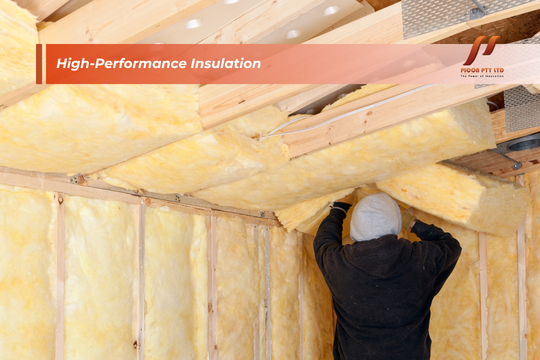
Good insulation reduces unwanted heat transfer through walls, ceilings, roofs, and floors. This helps maintain more stable indoor temperatures and reduces the amount of energy needed for heating and cooling.
Several sustainable insulation options are available.
Recycled glass insulation uses glass that may include recycled content and can provide excellent thermal and acoustic performance.
Cellulose insulation is often manufactured from recycled paper products treated for fire and pest resistance.
Polyester insulation may contain recycled plastic fibres and is commonly used in residential walls and ceilings.
Natural fibre products such as wool can also provide effective insulation in suitable applications.
The sustainability of insulation should not be judged only by what it is made from. Its thermal performance, durability, installation quality, moisture resistance, and expected service life are equally important.
A well-insulated home may save far more energy during its lifetime than the amount used to manufacture the insulation.
Recycled Glass
Recycled glass can be used in several modern building materials.
Crushed glass may be incorporated into concrete, terrazzo, benchtops, tiles, decorative surfaces, and landscaping materials.
Using recycled glass reduces demand for virgin raw materials while creating new uses for waste glass.
Glass is also highly durable and resistant to moisture, making it suitable for many interior and exterior applications.
Architectural glazing itself can contribute to sustainable design when it is selected carefully.
Double glazing, low-emissivity coatings, and solar-control glass can reduce unwanted heat transfer and improve indoor comfort.
Window size, orientation, shading, frame performance, and glazing type should always be considered together.
Reclaimed and Reused Materials
One of the simplest ways to reduce the environmental impact of construction is to reuse materials that already exist.
Reclaimed timber, bricks, stone, doors, hardware, tiles, fixtures, and structural components can sometimes be incorporated into new homes or renovations.
Reuse extends the life of existing materials and avoids some of the energy and resources required to manufacture replacements.
It can also create unique architectural character.
However, reused materials should be inspected for structural condition, contamination, damage, and suitability for the new application.
Older materials may not meet current performance or safety requirements, so professional assessment may be necessary.
Reuse works best when it is carefully integrated into the project rather than selected only for appearance.
Low-VOC Paints and Finishes
Sustainability is also about creating healthy indoor spaces.
Paints, adhesives, coatings, sealants, and engineered products can release volatile organic compounds into indoor air.
Low-VOC and low-emission products are designed to reduce these emissions.
They are especially useful in bedrooms, living spaces, nurseries, and homes designed for improved indoor air quality.
Low-VOC paints are now available in a wide range of colours and finishes and can provide similar appearance and durability to conventional products.
When comparing products, builders and homeowners should look beyond marketing terms and review available technical information.
Choosing low-emission finishes can complement natural ventilation and mechanical ventilation systems to create healthier indoor spaces.
Green Roofing Materials
The roof is one of the largest exposed surfaces of a home and can have a major impact on energy performance.
Light-coloured or reflective roofing materials can reduce solar heat absorption, particularly in hot climates.
Steel roofing can be a sustainable option because it is durable and highly recyclable.
Roof insulation should also be considered as part of the complete system.
In selected projects, green roofs can provide additional insulation, stormwater management, biodiversity, and urban cooling benefits.
However, green roofs require suitable waterproofing, drainage, structural support, and maintenance.
The most sustainable roofing solution depends on the climate, roof design, material lifespan, insulation, solar orientation, and maintenance requirements.
Sustainable Flooring Materials
Flooring covers a large area of the home, making it another important material choice.
Responsibly sourced timber, bamboo, cork, polished concrete, recycled timber, and selected recycled-content tiles can all support more sustainable interior design.
Durability should be a priority.
A flooring product that lasts several decades may provide better long-term value than a low-cost material that requires replacement after only a few years.
Maintenance products should also be considered. Some floors require frequent coatings or chemical cleaning products, while others need minimal treatment.
Choosing flooring that suits the room and expected traffic level helps extend its usable life.
Consider Embodied Carbon
Embodied carbon refers to the greenhouse gas emissions associated with producing, transporting, installing, maintaining, and eventually disposing of building materials.
Two materials that perform the same function may have very different embodied carbon impacts.
For example, a product manufactured locally from recycled content may require fewer resources and less transport than an imported virgin material.
However, lifespan also matters. A more durable product may have higher initial embodied carbon but require fewer replacements over the life of the building.
For this reason, material decisions should consider the complete life cycle rather than focusing only on manufacturing.
Reducing unnecessary material use is another effective strategy. Efficient structural design and accurate ordering can reduce waste before construction even begins.
Choose Materials That Last
Durability is one of the most overlooked aspects of sustainable construction.
A material that needs regular replacement creates additional manufacturing, transport, labour, and waste.
Long-lasting building materials reduce this cycle.
Exterior cladding should suit local weather conditions. Steel should have appropriate corrosion protection. Timber should be selected and treated for the correct exposure. Waterproofing systems should be compatible with surrounding materials and installed correctly.
Maintenance also affects longevity.
Even durable products can fail early if gutters are blocked, coatings are damaged, joints are neglected, or moisture is allowed to remain trapped.
Sustainable design therefore includes both material selection and long-term care.
Design for the Local Climate
The best sustainable building materials are those that work effectively within the local climate.
In hot areas, reflective roofing, thermal insulation, shading, and materials with suitable thermal mass can help reduce cooling demand.
In colder climates, high-performance insulation and airtight construction can reduce heat loss.
Coastal homes need corrosion-resistant metals and durable external finishes.
Tropical regions require strong moisture, mould, and termite resistance.
Bushfire-prone areas may require non-combustible materials and construction systems designed to resist ember attack and radiant heat.
A sustainable material should not be selected simply because it has green credentials. It must also perform reliably in the environment where it is installed.
Reduce Construction Waste
Material waste is a major environmental issue in construction.
Accurate planning and ordering can reduce unnecessary offcuts and excess materials.
Prefabricated components can also improve efficiency because they are manufactured in controlled conditions with precise dimensions.
Steel framing, modular wall systems, engineered timber, and prefabricated panels can all help reduce site waste when designed carefully.
Some suppliers and manufacturers also accept unused materials or recycling streams for steel, cardboard, timber, plastics, and packaging.
Separating waste on site makes it easier to recycle materials rather than sending everything to landfill.
Think About End-of-Life Recycling
Buildings eventually undergo renovations, extensions, or demolition.
Materials that can be reused, recycled, or safely processed at the end of their service life help support a more circular construction industry.
Steel and aluminium are particularly valuable because they can be recycled repeatedly.
Timber may be reused, recycled into other wood products, or recovered for energy depending on its treatment and condition.
Concrete can often be crushed and reused as aggregate or road base.
Some composite materials are more difficult to recycle because their components are permanently bonded together.
When possible, choosing mechanically fixed materials rather than permanently bonded systems can make future disassembly easier.
Balance Sustainability with Budget
Eco-friendly construction does not always require the most expensive materials.
Some sustainable products may cost more initially, but energy savings, reduced maintenance, and longer service life can improve overall value.
Other strategies, such as choosing locally available materials, reducing waste, using standard sizes, and improving insulation, may provide environmental benefits without dramatically increasing costs.
The goal should be to spend money where it provides meaningful long-term performance.
A highly efficient building envelope, for example, may offer greater environmental and financial benefits than an expensive decorative product with limited functional value.
Builders and homeowners should consider initial cost, lifespan, energy performance, maintenance, and end-of-life options together.
Work with Reliable Suppliers
Material information can sometimes be confusing, especially when many products are promoted as sustainable or environmentally friendly.
Reliable suppliers should be able to provide technical information, recycled content details, product certifications, installation guidance, warranties, and performance data.
Ask where materials are manufactured, what they contain, how long they are expected to last, and whether they can be recycled.
Clear documentation makes it easier to compare products based on actual performance rather than marketing claims.
Working with experienced suppliers can also help builders order accurate quantities, choose compatible products, and reduce construction waste.
Final Thoughts
Creating an eco-friendly home requires more than choosing a few products labelled “green”. Sustainable construction is about making thoughtful decisions across the entire building.
The best sustainable building materials combine responsible sourcing, durability, energy efficiency, reduced waste, low maintenance, and suitable end-of-life options.
Responsibly sourced timber, recycled steel, low-carbon concrete, recycled bricks, aluminium, bamboo, cork, efficient insulation, reclaimed products, and low-VOC finishes can all contribute to a more sustainable home when used appropriately.
However, material selection should always consider local climate, structural requirements, maintenance, transport, installation quality, and expected lifespan.
A material that lasts longer, improves thermal performance, and reduces future replacement may provide greater environmental value than one chosen only because it contains recycled content.
By taking a whole-of-life approach to material selection, builders and homeowners can create homes that use resources more efficiently, cost less to operate, and remain comfortable and durable for many years.
Build More Sustainably with Picon
Sustainable construction begins with selecting materials that perform well today and continue delivering value over the life of the building.
At Picon, we support residential, commercial, and prefabricated projects with reliable building materials and practical construction solutions. From steel, insulation, roofing, cladding, timber products, and composite systems to other modern building materials, our team can help you explore options that support durability, efficiency, and more sustainable construction.
Contact Picon to discuss your project requirements and find building materials suited to modern, eco-conscious construction.