Exterior Materials Guide for Harsh Australian Climates
Choosing the right materials for the outside of a home is one of the most important decisions in any building or renovation project. Australia’s climate can be demanding, with intense sunlight, heavy rain, salt air, strong winds, bushfire risk, humidity, and large temperature changes affecting different regions.
The wrong material may fade, crack, warp, corrode, or require frequent repairs. The right exterior materials, however, can protect the building, improve energy efficiency, reduce maintenance, and help the home look better for longer.
This guide explains the most common exterior materials used in Australian homes, how they perform in different climates, and what builders and homeowners should consider before making a final choice.
Why Exterior Materials Matter
Exterior materials form the first protective layer between the building and the surrounding environment. They help keep out wind, rain, heat, moisture, pests, and airborne contaminants.
They also influence the appearance of the home. Cladding, roofing, windows, decking, trims, and external finishes all contribute to the overall architectural style.
However, appearance should never be the only consideration. A material that looks attractive in a showroom may not perform well in a coastal location, tropical climate, bushfire-prone area, or region with extreme summer heat.
Good exterior materials should suit the local environment, work with the building design, and remain manageable to maintain over time.
Understanding Australia’s Climate Conditions
Australia has a wide range of climate zones, and each presents different challenges for building materials.
Coastal areas expose homes to salt, moisture, and strong winds. Salt can accelerate corrosion, particularly on unprotected steel, fixings, flashings, and other metal components.
Tropical and subtropical regions experience high humidity, intense rainfall, mould growth, and insect activity. Materials used in these environments need good moisture resistance and effective ventilation.
Hot inland regions place strong pressure on exterior finishes through ultraviolet exposure, heat, dust, and large temperature changes between day and night.
Southern areas may experience colder winters, heavy rain, frost, and prolonged damp conditions.
Bushfire-prone locations require materials and construction systems that reduce the risk of ignition, ember entry, and fire spread.
Because of these differences, there is no single exterior material that suits every Australian home.
Fibre Cement Cladding
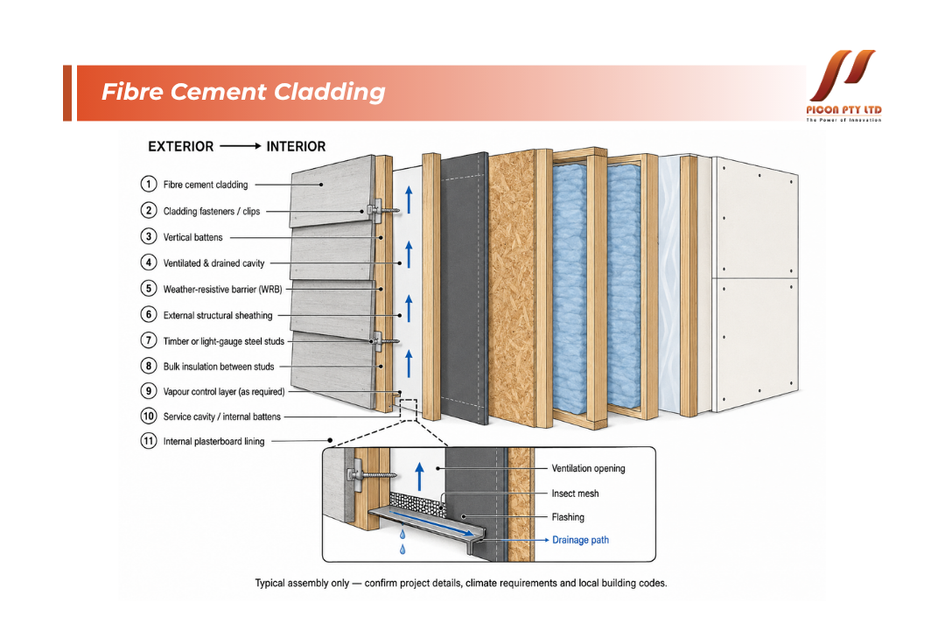
Fibre cement is one of the most widely used exterior materials in Australian residential construction. It is made from cement, cellulose fibres, sand, and other additives, producing a durable and stable cladding product.
Fibre cement is available as weatherboards, large-format panels, textured sheets, and decorative profiles. This makes it suitable for traditional, contemporary, coastal, and minimalist home designs.
One of its main advantages is resistance to moisture, termites, rot, and warping. It also performs well in areas exposed to changing temperatures.
Many fibre cement products offer strong fire performance, making them suitable for projects where non-combustible or fire-resistant materials are preferred.
The surface can be painted in many colours, allowing homeowners to refresh the appearance over time.
However, fibre cement is heavier than some alternative cladding materials. It must be handled carefully during transport and installation, and the supporting frame must be properly prepared.
Correct fixing, joint detailing, sealing, and painting are also important to prevent moisture entry and ensure long-term performance.
Brick
Brick remains one of the most trusted exterior materials for Australian homes.
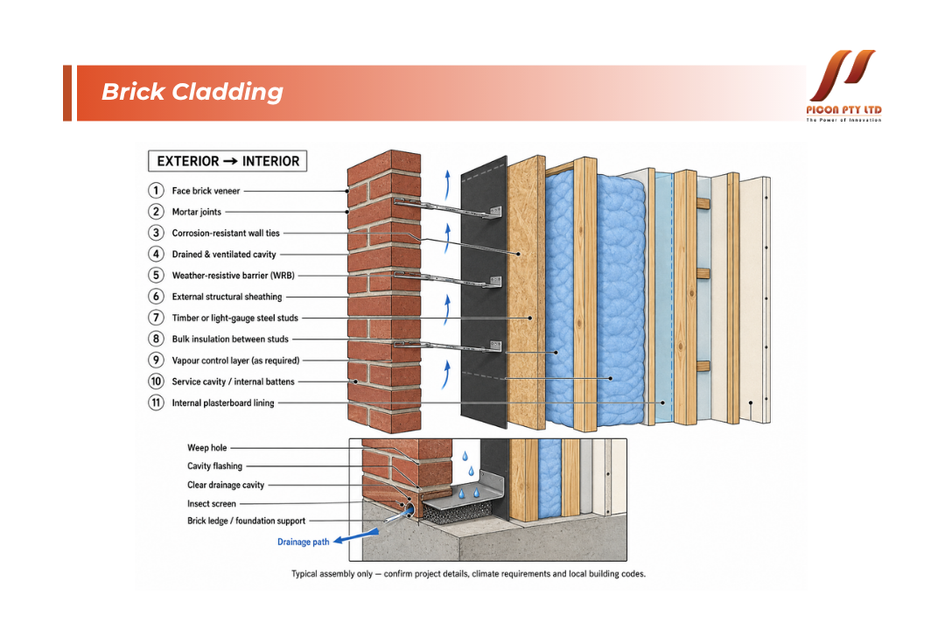
Clay bricks are durable, resistant to termites, and able to withstand intense sunlight, wind, and rain. They generally require very little maintenance and can retain their appearance for decades.
Brick also provides useful thermal mass. It absorbs heat during the day and releases it gradually as temperatures change. When combined with insulation and suitable building design, this can contribute to stable indoor temperatures.
Brick performs well in many climate zones, including hot, dry, and temperate regions.
In coastal environments, the brick itself may perform well, but mortar, wall ties, flashings, and fixings must be selected carefully to resist corrosion and salt exposure.
Brick is heavier than lightweight cladding and usually requires a suitable foundation. Construction can also take longer because each brick is installed individually.
Despite these limitations, brick remains popular because of its durability, low maintenance, and familiar appearance.
Timber Cladding
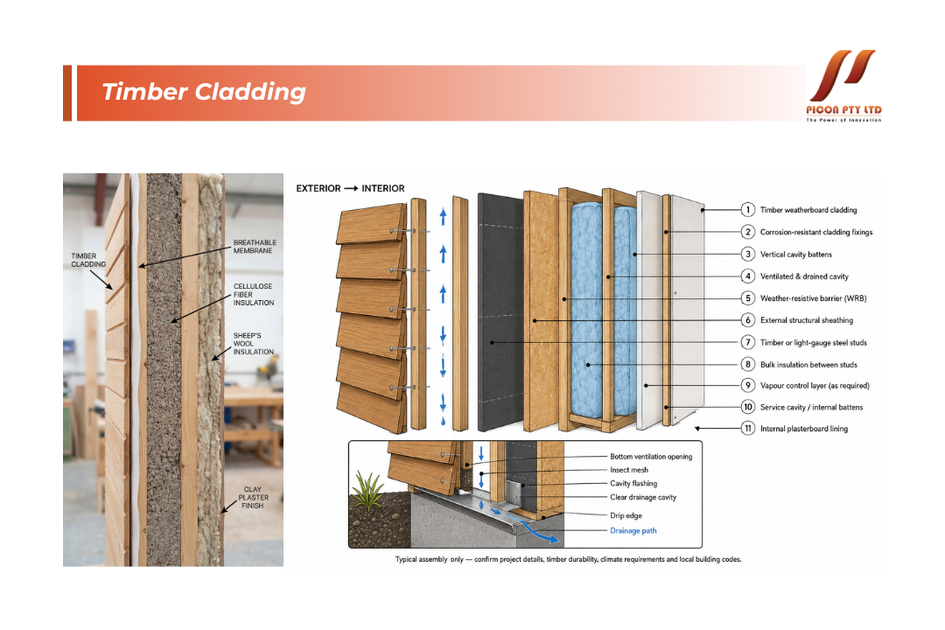
Timber cladding brings warmth, texture, and natural character to a home. It works well with both contemporary and traditional architecture and can be installed as vertical boards, horizontal weatherboards, battens, shingles, or feature panels.
Different timber species offer different levels of durability, stability, and resistance to insects.
Timber used externally must be suitable for outdoor exposure. Depending on the species, it may require treatment, sealing, staining, painting, or oiling to protect it from moisture and ultraviolet damage.
In dry climates, timber may crack or shrink if it is not properly selected and maintained. In humid areas, moisture can lead to swelling, mould, decay, or coating failure.
Timber cladding can perform well in coastal areas when durable species, suitable coatings, and corrosion-resistant fixings are used.
The main consideration is maintenance. Unlike brick or fibre cement, timber usually needs regular inspection and periodic refinishing.
For homeowners who appreciate a natural appearance and are prepared to maintain it, timber can be a highly attractive exterior material.
Steel Cladding
Steel cladding is widely used for modern homes, industrial-style designs, rural buildings, and commercial projects.
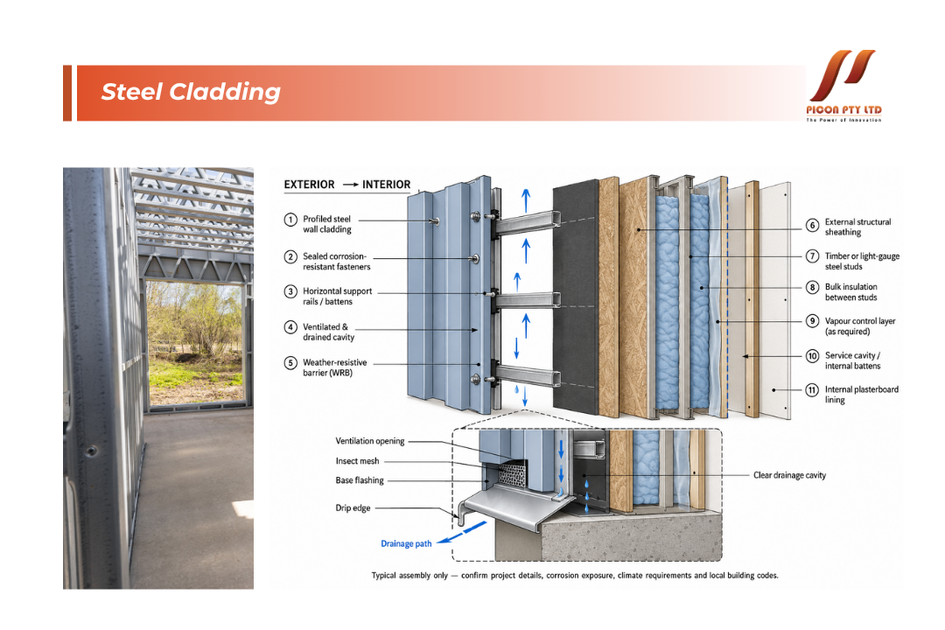
It is lightweight, durable, and available in a range of profiles, colours, and finishes. Corrugated sheets, standing-seam panels, and ribbed profiles can create a distinctive architectural appearance.
Steel performs well in strong sunlight and heavy rain when the correct coating system is selected.
It is also non-combustible, which can make it a useful option in bushfire-prone areas when it forms part of a compliant external wall system.
Steel cladding is relatively quick to install because large sheets can cover substantial areas.
However, corrosion protection is essential, especially in coastal and industrial environments. Salt, chemicals, and trapped moisture can damage unsuitable coatings.
Cut edges, drill swarf, incompatible fixings, and poor drainage can also lead to early corrosion.
Steel can expand and contract as temperatures change, so installation details must allow for movement.
With suitable coatings and correct installation, steel cladding can provide excellent long-term performance.
Aluminium Cladding
Aluminium is another lightweight exterior material used for wall panels, battens, trims, soffits, screens, and architectural features.
It is naturally resistant to corrosion because it forms a protective oxide layer. This makes aluminium useful in many coastal environments.
Powder-coated and anodised finishes provide additional protection while offering a wide range of colours and appearances.
Aluminium is easy to shape and fabricate, making it suitable for detailed façades and custom designs.
It does not rot, attract termites, or require the same maintenance as painted timber.
However, aluminium can dent more easily than heavier materials. It may also expand significantly in hot weather, so proper spacing and fixing methods are important.
Different metals should be separated where necessary to reduce the risk of galvanic corrosion.
When selected and installed correctly, aluminium provides a clean, modern, and low-maintenance exterior finish.
Stone Cladding
Natural stone creates a strong, premium appearance and performs well in harsh weather conditions.
Common stone options include sandstone, granite, limestone, slate, and various locally sourced products.
Stone is highly durable and resistant to wind, rain, and ultraviolet exposure. It can also add thermal mass to the building.
Full-depth stone is heavy and requires strong structural support, while stone veneer provides a similar appearance with less weight.
The performance of stone depends on the specific type. Some stones are more porous than others and may absorb moisture or stain if not sealed.
In coastal or high-rainfall areas, proper drainage and moisture detailing behind the stone are essential.
Stone cladding is usually more expensive than standard lightweight cladding and often requires skilled installation.
However, its long lifespan and natural appearance can make it a valuable feature material.
Rendered Masonry
Rendered brick, concrete block, and autoclaved aerated concrete are common exterior wall systems in Australian homes.
Render creates a smooth or textured finish that can suit modern, Mediterranean, or minimalist designs.
The appearance can be customised through colour, texture, and detailing.
Rendered masonry generally performs well in hot climates because of its thermal mass. It also provides a solid and durable external surface.
However, cracking can occur if the building moves or if control joints are not detailed correctly.
Render can also become stained by water runoff, dirt, or biological growth, particularly in shaded and humid locations.
Regular inspection, cleaning, and repainting may be required to maintain the finish.
Waterproof detailing around windows, doors, parapets, and wall junctions is essential because render alone should not be relied upon as the only barrier against water entry.
Composite Cladding
Composite cladding is manufactured by combining materials such as wood fibres, polymers, cement, aluminium, or mineral-based components.
These products are designed to provide specific performance benefits, such as reduced maintenance, improved durability, consistent appearance, or resistance to moisture.
Wood-plastic composite cladding can provide a timber-like appearance without the same level of staining or sealing required by natural wood.
Other composite panels may offer lightweight construction, insulation, or decorative finishes.
The performance of composite products varies significantly between manufacturers.
Homeowners should check fire performance, ultraviolet resistance, thermal movement, water resistance, warranty conditions, and installation requirements.
It is also important to understand what the product contains. Some composites may be suitable for certain low-rise applications but not for projects with stricter fire or façade requirements.
Quality composite cladding can be effective, but product selection must be based on verified performance rather than appearance alone.
Concrete
Concrete is commonly used externally for walls, panels, paths, driveways, patios, retaining structures, and architectural features.
It is strong, durable, and resistant to termites, fire, and intense ultraviolet exposure.
Precast concrete panels can be manufactured in controlled conditions and installed quickly on site.
Concrete also provides excellent thermal mass, which can help moderate indoor temperature changes when used with effective insulation.
However, concrete can crack because of shrinkage, temperature movement, soil movement, or structural loads.
It is also porous, meaning water can enter unless the surface and joints are detailed correctly.
In coastal areas, moisture and salt can eventually reach steel reinforcement if the concrete cover is inadequate or cracking is not repaired.
Concrete can perform exceptionally well in harsh climates, but correct mix design, reinforcement, drainage, curing, and joint detailing are essential.
Roofing Materials
Roofing is one of the most exposed parts of any building. It must cope with direct sunlight, heavy rain, wind, hail, debris, and rapid temperature changes.
Steel roofing is widely used in Australia because it is lightweight, durable, and suitable for steep or low-pitch roof designs.
Clay and concrete tiles are also common. They provide good thermal mass and can perform well in many regions, although they are heavier and may be damaged by severe impact.
Roofing materials should be chosen together with suitable insulation, ventilation, flashings, gutters, and drainage systems.
In coastal areas, roof coatings and fixings need appropriate corrosion resistance.
In bushfire-prone areas, roofing systems should reduce gaps where embers may enter.
The roof profile, slope, joint design, and installation quality are just as important as the material itself.
Read more: Roofing Materials Guide: Choosing the Best Option for Your Home
External Doors and Windows
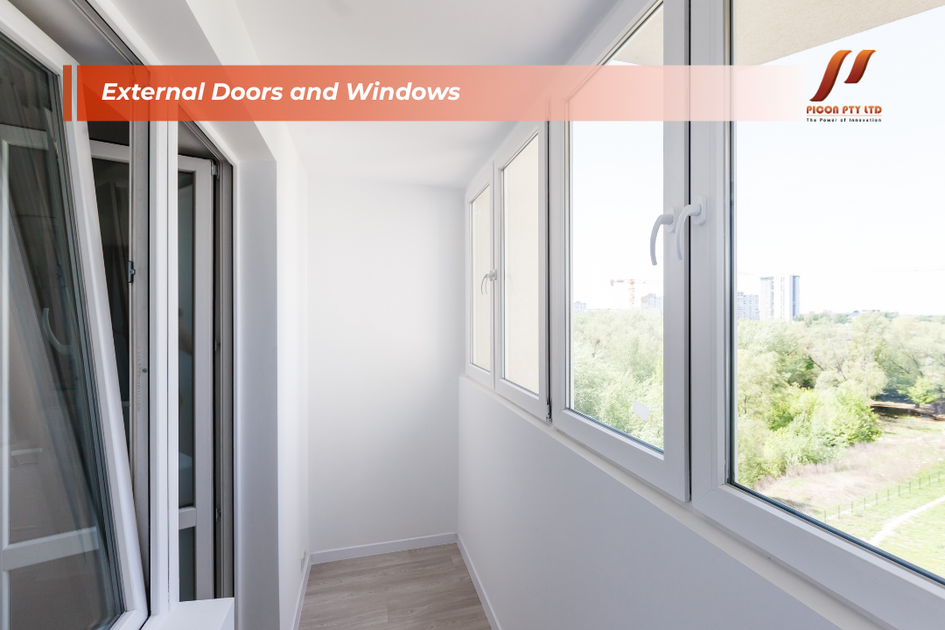
Doors and windows form part of the exterior envelope and must resist weather, heat, wind, and moisture.
Aluminium frames are widely used because they are durable, corrosion resistant, and low maintenance.
Timber frames provide a warmer appearance and good thermal performance but need regular protection from moisture and sunlight.
uPVC frames offer strong thermal performance and resistance to corrosion, although product quality and colour stability should be considered.
Glazing selection also affects comfort and energy efficiency. Double glazing, low-emissivity coatings, laminated glass, and solar-control glass can help reduce heat transfer and improve protection from harsh weather.
Frames, seals, flashings, and installation details must work together to prevent water entry and air leakage.
Decking Materials
Outdoor decks are exposed to sunlight, rain, dirt, moisture, and foot traffic.
Natural timber remains popular because of its appearance and comfortable feel. Durable hardwoods and treated softwoods are commonly used, depending on budget and location.
Timber decking requires regular cleaning and may need oiling or coating to maintain its colour and resistance to weathering.
Composite decking offers lower maintenance and good resistance to rot and insects.
However, some composite boards can become hot in direct sunlight, particularly in darker colours.
They also expand and contract, so correct spacing and fixing systems are important.
In coastal locations, stainless steel or suitably coated fixings may be required to prevent corrosion.
The supporting frame should receive the same attention as the visible deck boards because trapped moisture can damage substructure materials over time.
Choosing Materials for Coastal Homes
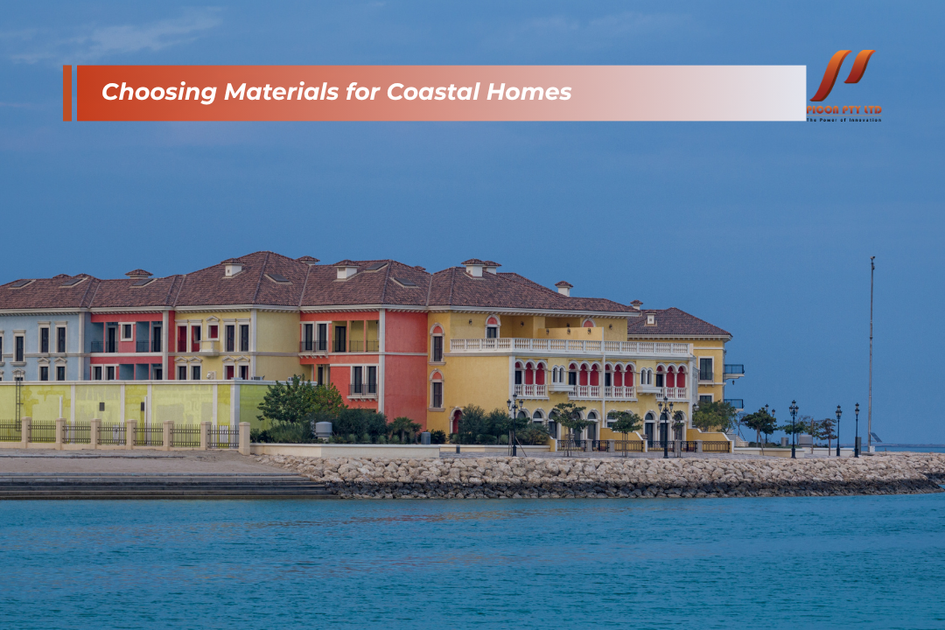
Coastal homes face continuous exposure to salt-laden air, humidity, wind, and strong sunlight.
Corrosion resistance should be a priority for cladding, roofing, flashings, fasteners, window frames, and external fittings.
Stainless steel, marine-grade aluminium, properly coated steel, fibre cement, brick, concrete, and selected timbers may all be suitable when used correctly.
Regular washing can help remove salt deposits from external surfaces.
Details that trap moisture should be avoided, and dissimilar metals should be separated.
A material that performs well several kilometres inland may require a different coating or grade closer to the ocean.
Choosing Materials for Hot and Dry Climates
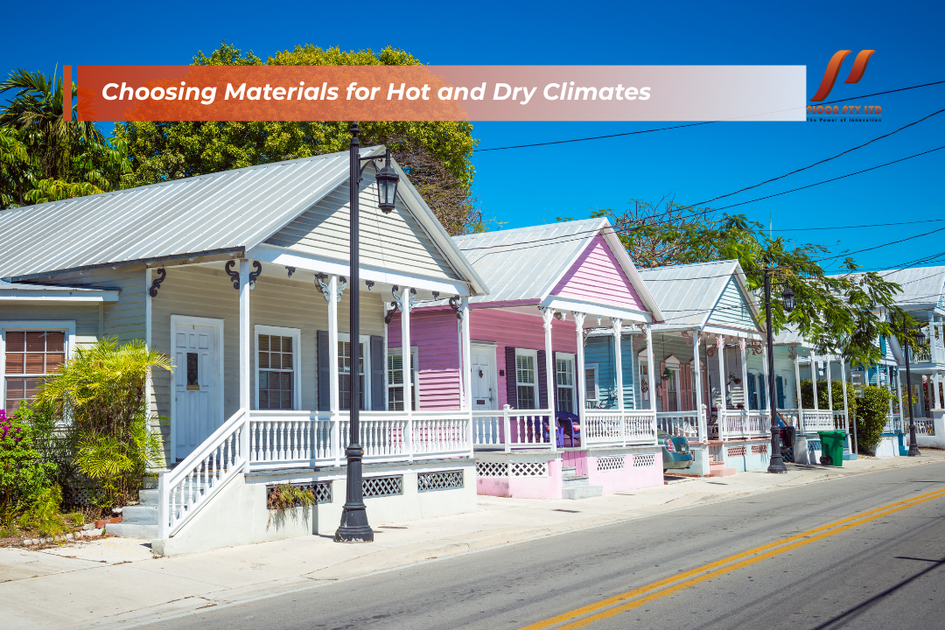
In hot inland regions, exterior materials must cope with high temperatures, ultraviolet exposure, dust, and significant thermal movement.
Light-coloured roofing and wall finishes can reduce heat absorption.
Masonry, brick, and concrete can provide useful thermal mass, especially when combined with shading, insulation, and night-time ventilation.
Steel and aluminium systems should allow for expansion and contraction.
Paints, sealants, membranes, and composite products should have strong ultraviolet resistance.
External finishes should also be easy to clean because dust can build up quickly in dry environments.
Choosing Materials for Tropical and Humid Climates
Tropical homes need materials that resist moisture, mould, termites, and heavy rainfall.
Fibre cement, brick, concrete, treated timber, aluminium, and selected steel systems are commonly used.
Ventilation and drainage are particularly important because even durable materials can fail if moisture becomes trapped behind them.
Wide eaves, raised floors, ventilated cavities, rain screens, and effective flashings can improve performance.
Timber products should be correctly treated and coated, while hidden framing should be protected from termites and persistent dampness.
Choosing Materials for Bushfire-Prone Areas
In bushfire-prone areas, exterior material selection must consider ignition risk, ember attack, radiant heat, and flame exposure.
Non-combustible materials such as brick, concrete, fibre cement, steel, and selected masonry systems are often preferred.
However, the complete construction system matters more than the external surface alone.
Gaps around roofs, vents, windows, doors, decks, and cladding joints may allow embers to enter.
Screens, seals, flashings, glazing, roof details, and landscaping all contribute to the overall performance of the home.
Material selection should be based on the site conditions, building design, and applicable construction requirements.
Maintenance and Long-Term Performance
No exterior material is completely maintenance-free.
Painted surfaces eventually need cleaning and recoating. Timber requires inspection for moisture, cracking, coating failure, and insect damage.
Metal surfaces should be checked for scratches, corrosion, loose fixings, and trapped debris.
Rendered walls may need repairs to cracks and sealants.
Gutters, flashings, drainage outlets, and wall joints should also be inspected regularly.
Good maintenance is usually more affordable than major replacement. Small problems such as failed sealant, damaged paint, or a blocked drain can lead to serious moisture damage if ignored.
Consider the Complete Wall System
Exterior materials do not work alone. They form part of a complete wall or roof system.
The cladding, framing, insulation, cavity, membrane, flashings, fixings, sealants, and internal lining must work together.
A durable exterior surface can still fail if water becomes trapped behind it or if the cavity cannot drain.
Similarly, a lightweight material may require specific bracing, support spacing, or movement joints.
When comparing exterior materials, consider the full system rather than only the visible finish.
Professional design and installation can help ensure all components are compatible.
Balance Cost and Long-Term Value
Initial price is important, but it should not be the only factor.
A lower-cost material may require more frequent repainting, sealing, repair, or replacement.
A more expensive material may provide better durability and lower maintenance over its lifespan.
Installation costs also vary. Heavy materials may require stronger foundations and more labour, while lightweight cladding may be faster to install but need specialised detailing.
It is useful to compare the total cost over many years rather than only the purchase price.
Final Thoughts
Choosing the right exterior materials is essential for creating a home that can handle Australia’s demanding climate.
Brick, fibre cement, timber, steel, aluminium, stone, concrete, render, and composite cladding all offer different benefits.
The best option depends on the location, building design, budget, maintenance expectations, fire risk, and level of exposure to moisture, salt, heat, wind, and sunlight.
Homeowners should also consider how each material works with insulation, drainage, ventilation, flashings, fixings, and other parts of the building envelope.
By selecting exterior materials that suit the local climate and following correct installation practices, builders and homeowners can create buildings that remain durable, efficient, and attractive for many years.
Choose Reliable Exterior Materials with Picon
Strong exterior performance begins with materials that suit the building and its environment.
At Picon, we support residential, commercial, and prefabricated construction projects with dependable building materials and practical product solutions. Whether your project requires steel products, cladding, insulation, roofing, composite systems, or other exterior materials, our team can help you explore options designed for Australian conditions.
Contact Picon to discuss your project requirements and find exterior materials that support durability, efficient construction, and long-term building performance.