Wall Cladding Guide for Modern Homes
The exterior of your home is more than just its appearance—it is the first line of defense against the elements. From protecting your home from rain and wind to improving insulation and increasing curb appeal, wall cladding plays a vital role in both the performance and aesthetics of a building.
With so many cladding materials available today, choosing the right one can feel overwhelming. Timber, brick, fibre cement, metal, stone, vinyl, and composite panels all offer different advantages depending on your budget, climate, and design preferences.
This wall cladding guide will help homeowners, builders, and renovators understand the purpose of wall cladding, explore the most popular materials, and learn how to choose the best option for a modern home.
What Is Wall Cladding?
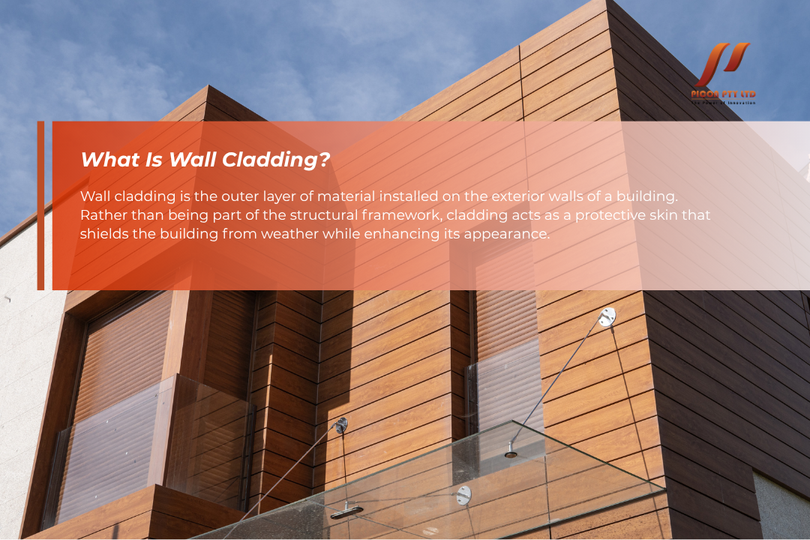
Wall cladding is the outer layer of material installed on the exterior walls of a building. Rather than being part of the structural framework, cladding acts as a protective skin that shields the building from weather while enhancing its appearance.
Modern cladding systems are designed to resist rain, wind, sunlight, and temperature changes. Many also improve a home’s thermal efficiency and help reduce maintenance over time.
Wall cladding is used on both residential and commercial buildings and is available in a wide variety of colours, textures, and finishes, making it easy to achieve almost any architectural style.
Why Wall Cladding Is Important
A complete wall cladding guide begins with understanding why cladding matters.
One of the primary functions of wall cladding is weather protection. A quality cladding system helps prevent moisture from entering the building envelope, reducing the risk of water damage, mould, and structural deterioration.
Cladding also improves energy efficiency. When installed as part of a well-designed wall system, it helps reduce heat transfer, allowing insulation to perform more effectively and making indoor temperatures more comfortable throughout the year.
Appearance is another major benefit. The right cladding material can completely transform the look of a home, whether you’re aiming for a contemporary, coastal, industrial, or traditional design.
In addition, many modern cladding products require very little maintenance compared to older building materials, saving homeowners both time and money over the life of the property.
Factors to Consider Before Choosing Wall Cladding
Choosing wall cladding involves more than simply selecting a colour or texture.
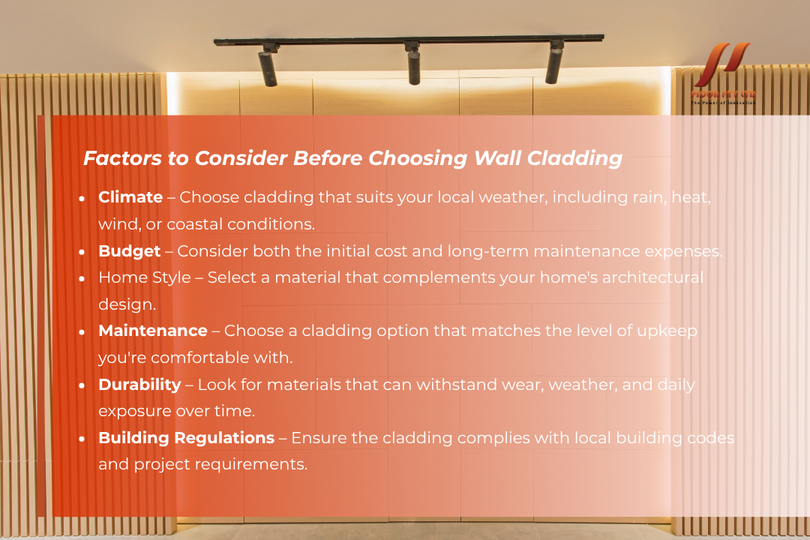
Climate should always be one of the first considerations. Homes located in coastal areas, high-rainfall regions, or areas with intense sunlight require cladding materials that perform well under those specific environmental conditions.
Budget is another important factor. While premium materials may cost more initially, they often provide longer service life and lower maintenance costs, making them a worthwhile long-term investment.
The style of your home should also influence your decision. Modern homes often feature clean lines and minimalist finishes, while heritage homes may suit more traditional cladding materials.
Maintenance requirements are worth considering as well. Some materials require regular painting or sealing, while others need only occasional cleaning.
Finally, always ensure the cladding system complies with local building regulations and is suitable for your home’s structural design.
Timber Cladding
Timber cladding remains one of the most popular choices for homeowners who appreciate a warm, natural appearance.
Available in various timber species and profiles, timber cladding creates a timeless look that suits both contemporary and traditional homes.
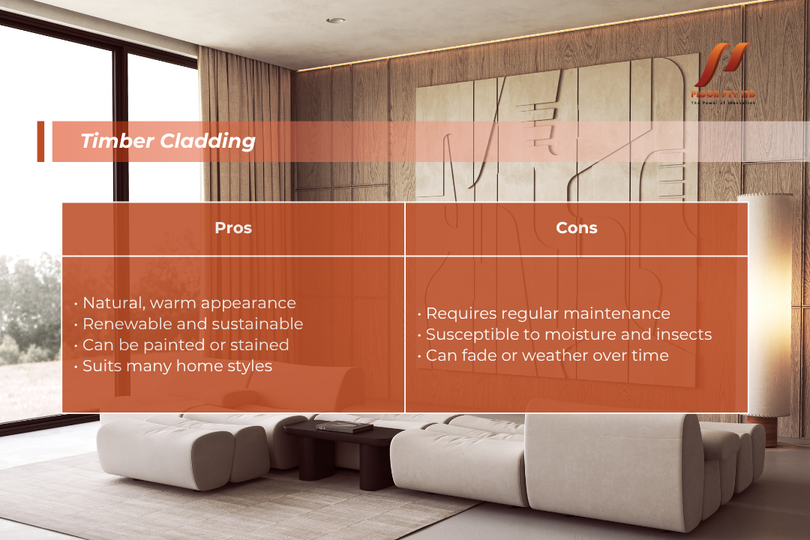
One of its biggest strengths is its natural beauty. Timber develops character over time and can be stained or painted in almost any colour to suit changing design preferences.
Timber is also a renewable building material when sourced from responsibly managed forests.
However, timber requires regular maintenance to protect it from moisture, ultraviolet exposure, and insects. Periodic staining, painting, or sealing helps maintain its appearance and extend its lifespan.
Fibre Cement Cladding
Fibre cement has become one of the most widely used cladding materials for modern residential construction.
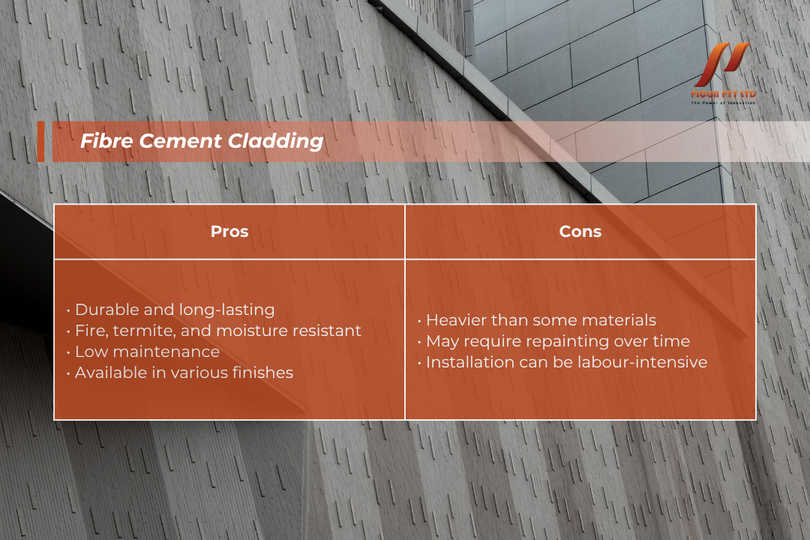
Made from cement, sand, cellulose fibres, and other reinforcing materials, fibre cement provides excellent durability while closely resembling timber or other natural finishes.
It is highly resistant to termites, moisture, and fire, making it a practical option for many climates.
Fibre cement also requires relatively little maintenance compared to natural timber, with occasional repainting depending on the finish.
Because it is dimensionally stable, fibre cement experiences less movement than many natural materials, helping maintain clean lines and smooth finishes.
Metal Cladding
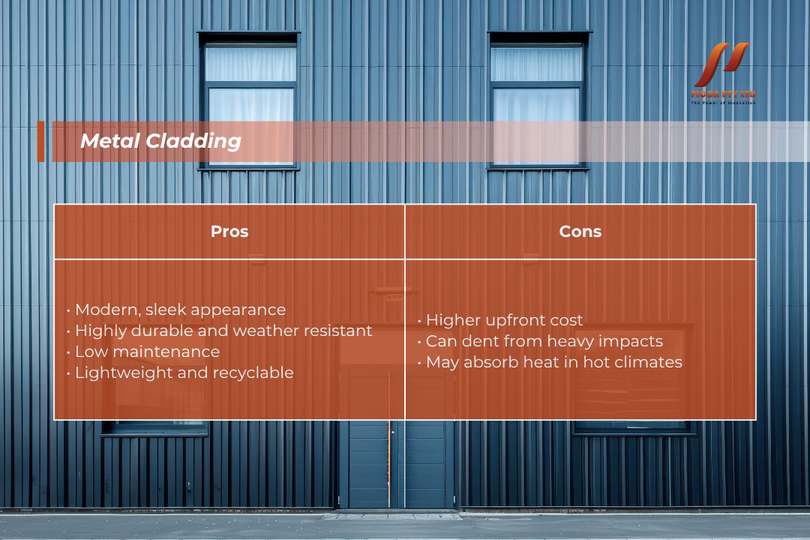
Metal cladding has become increasingly popular in contemporary architecture due to its sleek appearance and outstanding durability.
Steel and aluminium are the most commonly used materials for residential wall cladding.
Metal panels create a clean, modern aesthetic while providing excellent resistance against weather and impact.
Protective coatings help prevent corrosion and maintain colour over many years, even in demanding environments.
Metal cladding is also relatively lightweight, making installation efficient for many building types.
Although the initial investment may be higher than some alternatives, its long lifespan and low maintenance often provide excellent long-term value.
Brick Cladding
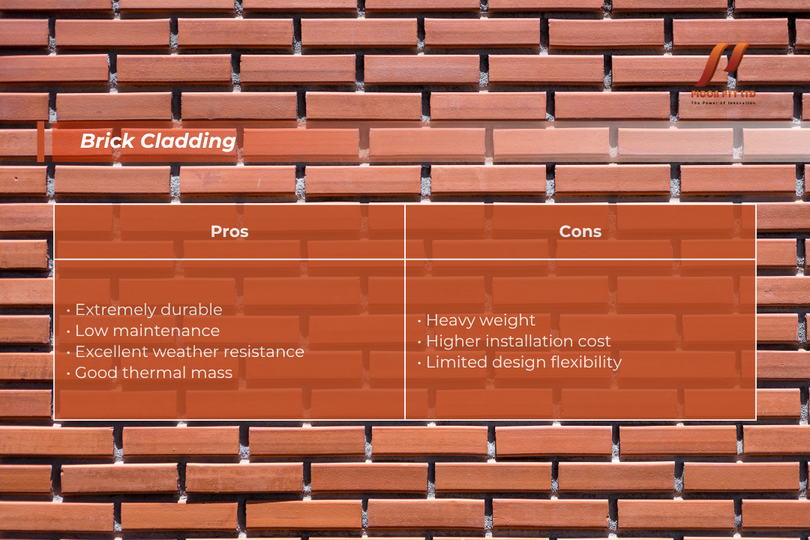
Brick remains one of the most recognised exterior finishes in residential construction.
Brick cladding provides a traditional appearance while offering exceptional durability and weather resistance.
It requires very little maintenance and can last for many decades without significant deterioration.
Brick also offers good thermal mass, helping moderate indoor temperature fluctuations by absorbing and releasing heat gradually.
The main disadvantages are its weight and installation cost, which are generally higher than many lightweight cladding systems.
Stone Cladding
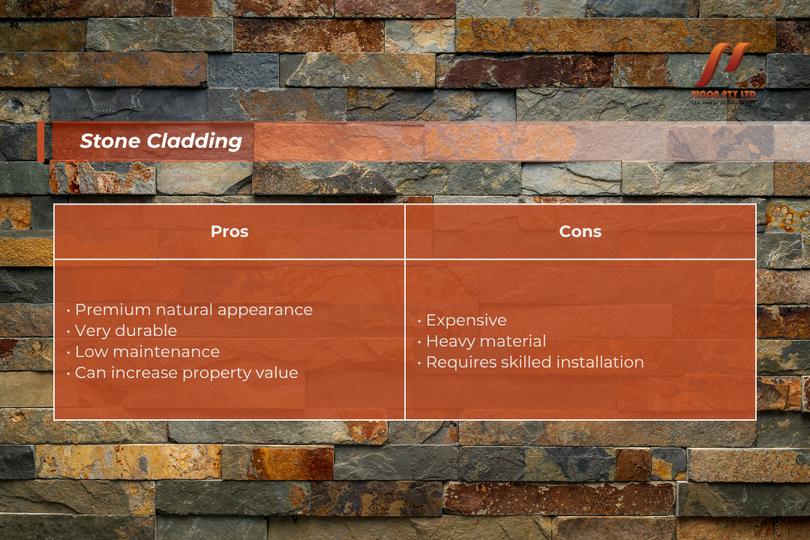
Natural stone cladding creates a premium appearance that is difficult to replicate with other materials.
Stone is available in numerous colours, textures, and finishes, allowing homeowners to create unique architectural features.
It offers excellent durability and outstanding weather resistance while requiring minimal maintenance.
Stone can also increase property value due to its luxurious appearance.
However, natural stone is among the most expensive cladding options and often requires experienced installers because of its weight and complexity.
Vinyl Cladding
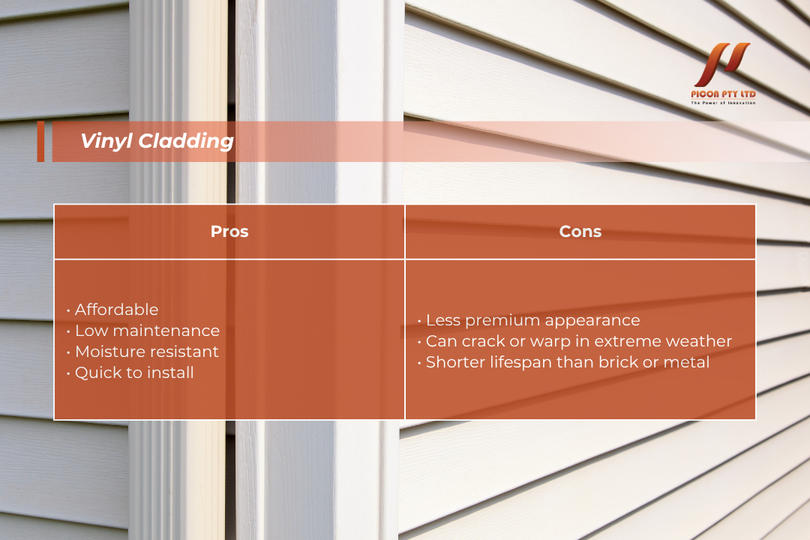
Vinyl cladding is widely used because it offers an affordable and low-maintenance exterior finish.
It is available in a wide range of colours and styles that can imitate timber weatherboards or other materials.
Vinyl does not require painting and is resistant to moisture, making routine maintenance relatively simple.
Installation is often faster than heavier cladding materials, helping reduce labour costs.
However, vinyl may not provide the same premium appearance or lifespan as materials such as brick, stone, or metal.
Composite Cladding
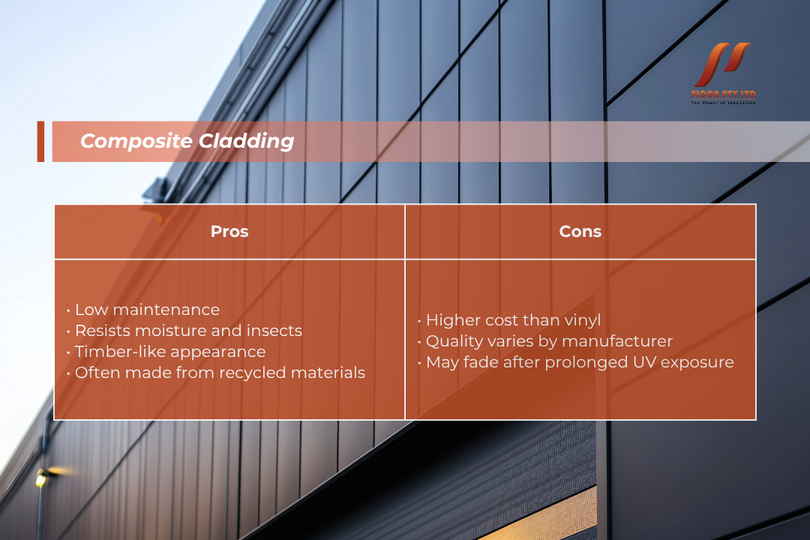
Composite cladding combines recycled wood fibres, plastics, or other materials to create durable, low-maintenance panels.
Many homeowners choose composite products because they closely resemble natural timber while eliminating many of the maintenance requirements associated with real wood.
Composite cladding typically resists moisture, insects, fading, and warping better than untreated timber.
Many products are also manufactured using recycled materials, making them an environmentally conscious option.
As manufacturing technology improves, composite cladding continues to become more popular in modern residential design.
Energy Efficiency and Wall Cladding
An important part of any wall cladding guide is understanding how cladding contributes to energy efficiency.
While insulation remains the primary thermal barrier, cladding helps protect the wall system from direct weather exposure and can improve overall building performance.
Ventilated cladding systems create an air cavity between the exterior material and the wall structure. This cavity allows moisture to escape while helping regulate wall temperatures.
Light-coloured cladding materials may also reflect more solar heat, helping reduce cooling demands in warmer climates.
When combined with quality insulation and proper building design, wall cladding contributes to a more comfortable and energy-efficient home.
Maintenance Requirements
Different cladding materials require different levels of maintenance.
Timber generally requires the most attention, with periodic painting, staining, or sealing needed to maintain appearance and durability.
Fibre cement usually requires occasional repainting after many years, depending on the finish.
Metal cladding often needs little more than regular cleaning to remove dirt or salt deposits, particularly in coastal areas.
Brick and stone require very little maintenance beyond occasional cleaning and inspection of mortar joints.
Regardless of the material, homeowners should regularly inspect cladding for damage, loose panels, cracks, or signs of moisture intrusion to prevent larger problems.
Sustainability Considerations
Sustainability has become an increasingly important consideration when selecting wall cladding materials.
Responsibly sourced timber offers a renewable option that stores carbon throughout its service life.
Many metal cladding products contain recycled content and are fully recyclable at the end of their lifespan.
Composite materials increasingly incorporate recycled plastics and reclaimed wood fibres, reducing waste while delivering durable performance.
Choosing long-lasting materials also contributes to sustainability by reducing replacement frequency and conserving natural resources over time.
Choosing the Right Wall Cladding for Your Home
Every home has unique requirements, so there is no single cladding material that suits every project.
If you prefer a natural appearance, timber or composite cladding may be ideal. For homeowners seeking modern architectural lines with minimal maintenance, metal cladding is an excellent option.
Brick and stone provide exceptional longevity and timeless appeal, while fibre cement offers an excellent balance between durability, affordability, and versatility.
Climate, maintenance expectations, budget, architectural style, and local building regulations should all be carefully considered before making a final decision.
Consulting with experienced builders or cladding suppliers can help ensure the selected system matches both your design goals and performance requirements.
Final Thoughts
Wall cladding does much more than improve the appearance of a home. It protects the building from weather, contributes to energy efficiency, enhances durability, and increases long-term property value. This wall cladding guide has explored the most common cladding materials, their characteristics, and the key factors to consider when selecting the right option for your project.
Whether you’re building a new home or renovating an existing one, choosing high-quality wall cladding is an investment that pays dividends for years to come. By selecting materials suited to your climate, budget, and design preferences, you can create a home that is attractive, durable, and comfortable in every season.
Working with trusted builders and reliable material suppliers ensures your cladding system is installed correctly and performs as intended, giving you confidence that your home will remain protected and beautiful for decades.
Looking for Quality Wall Cladding Solutions?
The right wall cladding can improve your home’s appearance, durability, and energy efficiency for years to come. At Picon, we supply high-quality building materials and cladding solutions for residential and commercial projects, helping builders, architects, and homeowners choose products that combine performance with modern design.
Whether you’re planning a new build or upgrading an existing property, our experienced team can help you find the right wall cladding solution for your project. Contact Picon today to learn more about our product range and discover how we can support your next construction project.