Concrete Guide: Types, Uses and Benefits
Concrete is one of the most widely used construction materials in the world, and for good reason. From residential homes and commercial buildings to roads, bridges, and public infrastructure, concrete provides the strength, durability, and versatility needed for countless construction projects. Whether you’re building a new home, renovating an existing property, or managing a large-scale development, understanding the basics of concrete can help you make informed decisions.
Modern concrete has evolved significantly over the years. Today, there are many different types of concrete designed for specific applications, offering improved strength, faster curing times, enhanced durability, and better sustainability. Choosing the right type of concrete can improve construction quality, reduce maintenance costs, and extend the lifespan of a structure.
This concrete guide explains what concrete is, how it works, the different types available, their common uses, and the benefits of choosing concrete for residential and commercial construction.
What Is Concrete?
Concrete is a composite building material made by mixing cement, water, fine aggregates such as sand, and coarse aggregates like gravel or crushed stone. When these ingredients are combined, a chemical reaction known as hydration occurs, causing the mixture to harden into a solid, stone-like material.
Although many people use the terms “cement” and “concrete” interchangeably, they are not the same. Cement is only one ingredient in concrete. It acts as the binding agent that holds the sand and aggregate together after mixing with water.
Because concrete can be poured into almost any shape before it hardens, it offers tremendous design flexibility for builders, engineers, and architects.
Common Uses of Concrete
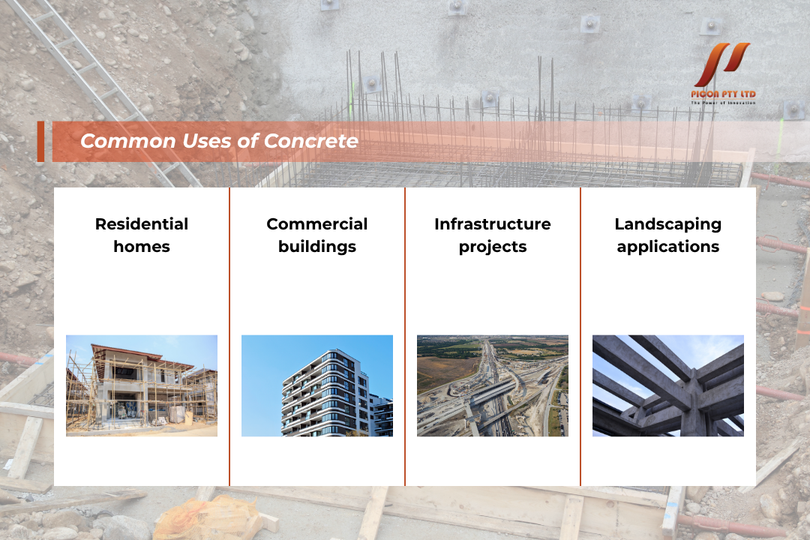
Concrete is used in almost every area of modern construction.
Residential homes rely on concrete for foundations, slabs, driveways, footpaths, retaining walls, and outdoor entertaining areas.
Commercial buildings use reinforced concrete for columns, beams, suspended floors, parking structures, and lift cores.
Infrastructure projects such as highways, bridges, tunnels, airports, dams, and water treatment facilities also depend heavily on concrete because of its strength and durability.
Landscaping applications include garden edging, decorative paving, retaining walls, outdoor furniture, and water features.
Its versatility allows designers to create both structural and decorative elements using the same basic material.
Why Concrete Is So Popular
A complete concrete guide should explain why concrete continues to be one of the most trusted construction materials.
One of the biggest reasons is its exceptional strength. Properly designed concrete structures can support enormous loads while maintaining stability over many decades.
Concrete is also highly durable. It performs well under heavy traffic, harsh weather conditions, and continuous use, making it suitable for everything from residential driveways to high-rise buildings.
Another reason for its popularity is versatility. Concrete can be moulded into foundations, slabs, walls, columns, stairs, retaining walls, decorative features, and countless other structural elements.
Its relatively low maintenance requirements also make concrete an attractive long-term investment for homeowners and developers alike.
How Concrete Gains Strength
Unlike many building materials, concrete does not simply dry to become hard. Instead, it gains strength through a chemical reaction between cement and water.
This process continues long after the concrete has been poured. While fresh concrete may become firm enough to walk on within a day or two, it generally reaches most of its design strength after approximately 28 days under normal curing conditions.
Proper curing is essential because it allows hydration to continue while reducing the risk of cracking caused by rapid moisture loss.
Temperature, moisture, and curing methods all influence the final strength and durability of concrete.
Common Types of Concrete
There are many different concrete mixes available, each designed for specific construction applications.
Normal Strength Concrete
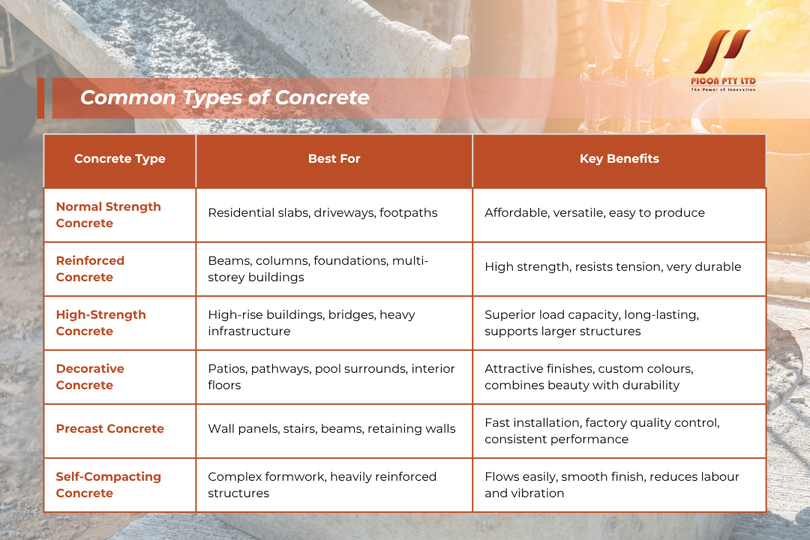
Normal strength concrete is the most commonly used type for residential construction. It provides sufficient strength for foundations, footpaths, patios, driveways, and many other everyday applications.
Because it is relatively economical and easy to produce, normal strength concrete remains the standard choice for many building projects.
Reinforced Concrete
Reinforced concrete contains steel reinforcement bars or steel mesh embedded within the concrete.
While concrete performs exceptionally well under compression, steel reinforcement improves its ability to resist tension and bending forces.
Reinforced concrete is widely used in foundations, beams, columns, suspended slabs, retaining walls, and multi-storey buildings where structural strength is essential.
High-Strength Concrete
High-strength concrete is specially designed to achieve significantly greater compressive strength than conventional concrete.
It is commonly used in high-rise buildings, bridges, heavy industrial facilities, and major infrastructure projects where increased load-bearing capacity is required.
Although more expensive than standard concrete, its superior performance allows engineers to reduce member sizes while maintaining structural integrity.
Decorative Concrete
Decorative concrete combines structural performance with aesthetic appeal.
It can be coloured, polished, stamped, exposed, or textured to resemble stone, brick, timber, or other premium finishes.
Decorative concrete is often used for patios, driveways, pool surrounds, pathways, and interior flooring where appearance is an important consideration.
Precast Concrete
Precast concrete components are manufactured in controlled factory environments before being transported to construction sites for installation.
Examples include wall panels, beams, columns, stairs, pipes, and retaining wall systems.
Factory production provides excellent quality control while reducing construction time on-site.
Self-Compacting Concrete
Self-compacting concrete is designed to flow into complex formwork without requiring extensive vibration.
It is especially useful for heavily reinforced structures where conventional concrete may be difficult to place properly.
This type of concrete helps improve construction efficiency while producing smooth, high-quality finishes.
Advantages of Concrete
One of the greatest strengths of concrete is its durability. Properly constructed concrete structures can remain in service for many decades with relatively little maintenance.
Concrete also provides excellent fire resistance because it does not burn or release toxic fumes during a fire.
Its high compressive strength allows it to support heavy loads without significant deformation, making it suitable for both residential and large-scale commercial construction.
Concrete is also highly versatile. It can be poured into virtually any shape or form, allowing architects and engineers considerable design freedom.
Another benefit is thermal mass. Concrete absorbs and stores heat during the day before gradually releasing it as temperatures cool, helping moderate indoor temperature fluctuations and improve energy efficiency.
Factors That Affect Concrete Performance
The quality of finished concrete depends on several important factors.
The water-to-cement ratio has one of the greatest influences on strength and durability. Too much water weakens the finished concrete, while too little water makes placement more difficult.
The quality of aggregates also affects performance. Clean, properly graded sand and stone help create stronger, longer-lasting concrete.
Proper mixing, transportation, placement, compaction, and curing all contribute to the final quality of the structure.
Environmental conditions such as temperature and humidity during curing also influence strength development and long-term durability.
Concrete Maintenance
Although concrete requires relatively little maintenance, regular care helps maximise its lifespan.
Keeping surfaces clean prevents dirt, moss, and stains from accumulating.
Small cracks should be repaired promptly to prevent water penetration and further deterioration.
In areas exposed to freeze-thaw cycles or heavy traffic, protective sealers may help extend service life by reducing moisture absorption.
Regular inspections allow homeowners and property managers to identify minor issues before they become expensive structural repairs.
Sustainability and Environmental Considerations
Modern concrete manufacturing continues to improve its environmental performance through new technologies and materials.
Many concrete mixes now include supplementary cementitious materials such as fly ash, slag, or silica fume, which partially replace traditional cement while improving durability.
Recycled concrete aggregates can also be used in certain applications, helping reduce waste and conserve natural resources.
Concrete’s long service life contributes to sustainability by reducing the need for frequent replacement.
Its thermal mass also supports energy-efficient building design by helping stabilise indoor temperatures and reducing heating and cooling demands.
As the construction industry continues to focus on sustainability, new low-carbon concrete technologies are becoming increasingly available.
Read more: Roofing Materials Guide: Choosing the Best Option for Your Home
Choosing the Right Concrete for Your Project
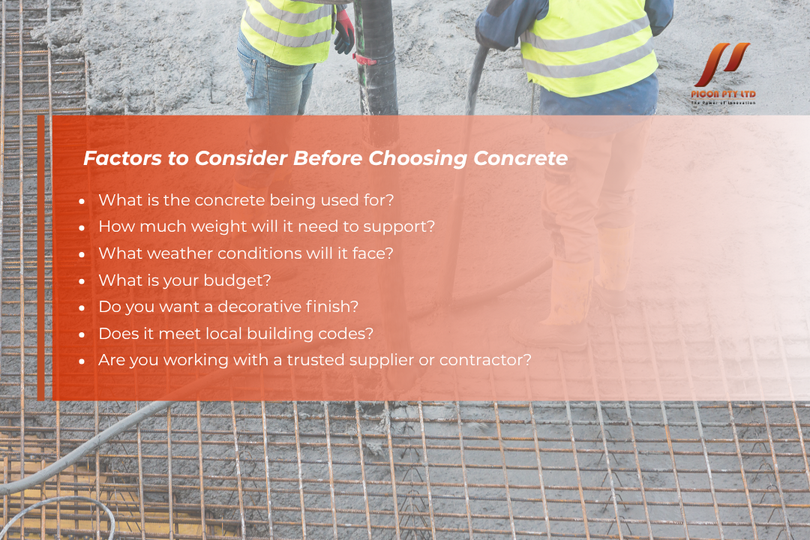
Selecting the appropriate concrete depends on several factors, including structural requirements, environmental conditions, project budget, and desired appearance.
Residential slabs and driveways may only require standard concrete mixes, while commercial buildings often rely on reinforced or high-strength concrete.
Decorative applications may benefit from coloured, stamped, or polished finishes to achieve the desired visual effect.
Consulting with experienced engineers, builders, or concrete suppliers helps ensure the selected mix meets both structural requirements and local building standards.
Choosing quality materials and experienced contractors is just as important as selecting the correct concrete mix.
Why Quality Concrete Matters
Concrete forms the foundation of many buildings, making quality essential from the very beginning of a project.
Poor-quality concrete or improper installation can lead to cracking, reduced durability, water penetration, and expensive repairs.
High-quality concrete, combined with correct placement and curing, provides reliable structural performance for decades.
Investing in quality materials during construction often results in lower maintenance costs and improved long-term value.
Whether the project involves a small residential patio or a major commercial development, strong concrete contributes to a safer and more durable building.
Final Thoughts
Concrete remains one of the most dependable building materials available today. Its combination of strength, durability, versatility, and long service life makes it suitable for an enormous variety of construction projects. This concrete guide has explored how concrete is made, the different types available, their common uses, and the many benefits they offer homeowners, builders, and developers.
Understanding the basics of concrete allows you to make more informed decisions when planning a construction project. From selecting the right concrete mix to ensuring proper installation and curing, every step contributes to the overall performance of the finished structure.
Whether you’re building a home, upgrading a driveway, or managing a large commercial development, choosing high-quality concrete and working with experienced professionals will help ensure your project remains strong, safe, and reliable for many years to come.
Build Stronger with Quality Concrete Solutions from Picon
Choosing the right concrete is the foundation of every successful construction project. At Picon, we supply high-quality construction materials and work closely with builders, contractors, and developers to deliver reliable solutions for residential and commercial projects.
Whether you need materials for foundations, slabs, driveways, or large-scale construction, our experienced team can help you select products that meet your project’s performance and quality requirements. Contact Picon today to learn more about our construction material solutions and how we can support your next build.