Building Materials Guide for DIY Builders
Taking on a DIY building project can be rewarding, practical, and cost-effective. Whether you are constructing a garden shed, repairing a wall, building a deck, renovating a room, or completing a small home improvement project, the quality of your result depends heavily on the materials you choose.
For many DIY builders, selecting the right building materials can feel more difficult than the construction work itself. Hardware stores and suppliers offer a wide range of products, and materials that look similar may perform very differently once installed. Some are designed for indoor use, while others are made to withstand moisture, sunlight, heavy loads, or changing weather conditions.
The right materials can make a project easier to complete, improve durability, reduce maintenance, and help prevent expensive repairs. Poor material selection, on the other hand, can lead to cracking, movement, corrosion, water damage, or premature failure.
This guide explains the most common building materials used in DIY construction, where they are best used, and what you should consider before buying them.
Start with the Purpose of Your Project
Before choosing any building materials, you need to clearly understand what the finished structure is expected to do.
A decorative indoor shelf has very different material requirements from an outdoor deck or a load-bearing wall. A garden structure must cope with rain, sunlight, insects, and soil contact, while an internal partition may need to support plasterboard, insulation, and wall-mounted fixtures.
Think about the location, expected load, exposure to weather, appearance, lifespan, and maintenance requirements. You should also consider whether the project needs to meet structural, fire, waterproofing, electrical, or plumbing regulations.
Defining these requirements early helps narrow down your material options and reduces the risk of buying products that are unsuitable for the job.
Timber
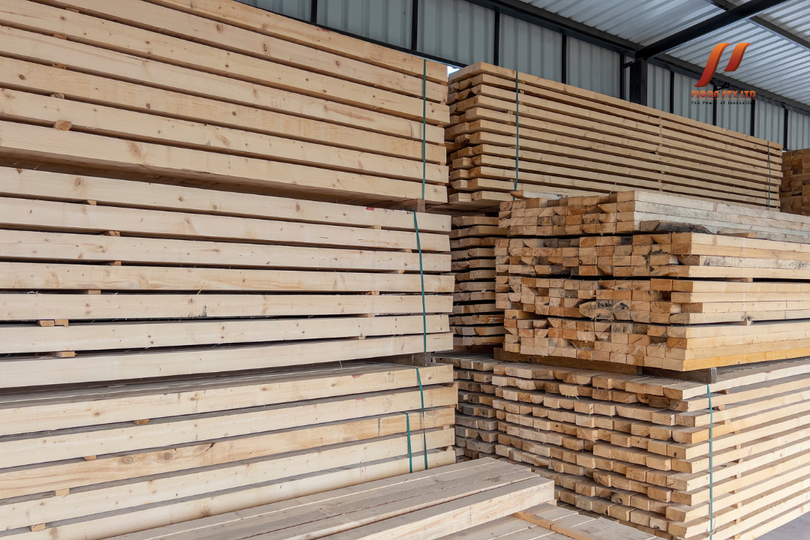
Timber is one of the most familiar and versatile building materials available to DIY builders. It is commonly used for wall framing, decks, pergolas, shelving, furniture, fences, flooring, and decorative features.
One of timber’s main advantages is that it is relatively easy to cut, drill, shape, and fasten with common tools. This makes it suitable for beginners and experienced DIY builders alike.
Timber is available in many species, grades, sizes, and treatment levels. Structural timber is graded according to its strength and intended use, while decorative timber is often selected for its colour, grain, and finish.
For outdoor projects, treated timber is usually necessary because untreated wood can be damaged by moisture, fungi, termites, and other insects. The treatment level should match the exposure conditions. Timber used above ground may require a different treatment from timber that is installed in or near the soil.
Moisture content is another important consideration. Timber can expand, shrink, twist, or warp as its moisture level changes. Allowing boards to acclimatise before installation and providing appropriate gaps can reduce movement problems.
Timber remains an excellent choice for many DIY projects, but it should always be selected according to its structural grade, treatment, and intended environment.
Read more: Timber Framing Guide: Everything You Need to Know
Steel
Steel is widely used in modern construction because of its strength, durability, and consistent dimensions. DIY builders may use steel for wall framing, roofing, posts, beams, brackets, gates, fences, shelving, and outdoor structures.
Light-gauge steel framing is commonly used for internal walls and small building systems. It is lightweight, straight, and resistant to termites, rot, and warping. Steel studs can be cut and assembled using specialised screws and suitable metal-cutting tools.
Structural steel sections are much heavier and are used where greater load capacity is required. These components may need professional engineering, fabrication, welding, or lifting equipment, so they are not always suitable for fully DIY construction.
Steel products used outdoors should have appropriate corrosion protection. Galvanised steel, coated steel, and stainless steel offer different levels of resistance depending on the environment. Coastal areas and locations exposed to salt or chemicals may require higher-grade protection.
Steel can provide reliable long-term performance, but DIY builders must pay attention to sharp edges, correct fixings, corrosion protection, and structural requirements.
Read more: Steel Stud Guide for Interior Wall Construction

Concrete
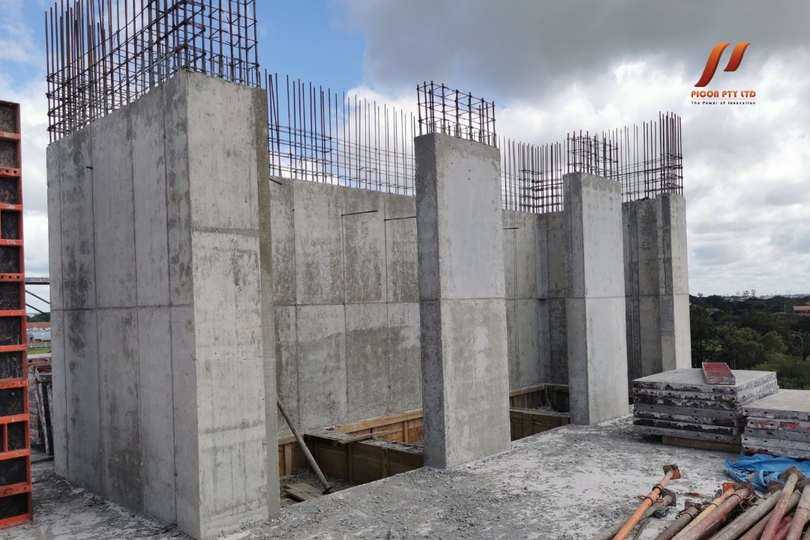
Concrete is one of the most important building materials for foundations, pathways, slabs, footings, steps, posts, and landscaping projects.
It is made by combining cement, sand, aggregate, and water. Pre-mixed concrete bags are convenient for smaller DIY jobs because the proportions are already controlled. Larger projects may require ready-mix concrete delivered to the site.
The strength and durability of concrete depend on accurate mixing, correct placement, proper compaction, and sufficient curing time. Adding too much water may make the mixture easier to pour, but it can reduce the final strength and increase cracking.
The base beneath the concrete is also important. Soil should be stable and compacted, and many projects require a layer of crushed rock or other prepared material beneath the slab.
Reinforcing mesh or steel bars may be required to help control cracking and support loads. Reinforcement must be positioned correctly within the concrete rather than left sitting directly on the ground.
Concrete continues to gain strength after it is placed, so the surface should be protected from rapid drying. Proper curing helps improve strength, durability, and resistance to surface damage.
For larger structural slabs or foundations, professional advice is recommended because incorrect construction can lead to serious and expensive problems.
Read more: Concrete Guide: Types, Uses and Benefits
Bricks and Blocks
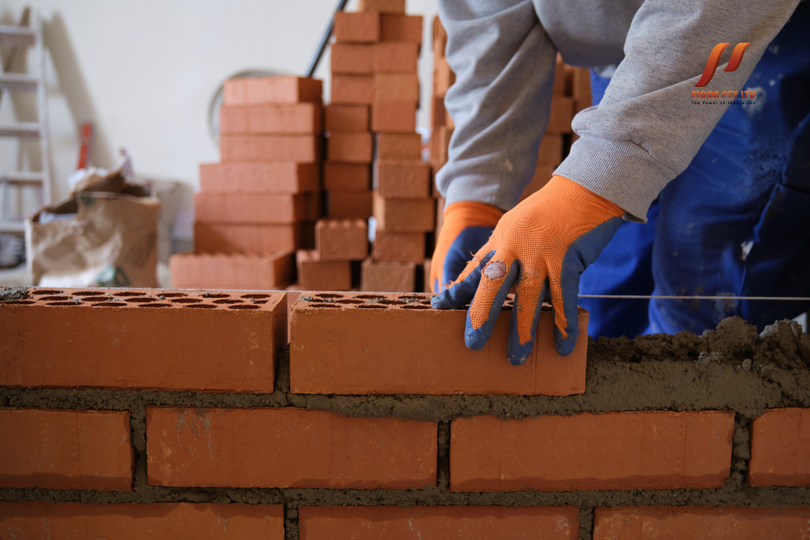
Bricks and concrete blocks are popular for garden walls, retaining features, outdoor kitchens, pathways, steps, and small masonry structures.
Clay bricks offer a traditional appearance and excellent durability. Concrete blocks are larger and can make construction faster, particularly for walls that will later be rendered or finished.
Successful masonry depends on a stable foundation, consistent mortar joints, accurate alignment, and correct wall reinforcement where required.
DIY builders should take time to establish level and straight reference lines before laying the first course. Small errors at the base can become much more noticeable as the wall becomes taller.
Mortar should be mixed to the correct consistency and used within the recommended working time. Joints must be fully filled and finished neatly to help prevent water penetration.
Not every masonry wall is suitable for DIY construction. Tall walls, retaining walls, boundary walls, and structural masonry may require engineering, drainage systems, reinforcement, and council approval.
For small decorative projects, bricks and blocks can be manageable materials, but larger structures should be planned carefully.
Read more: Brick Guide for Residential and Commercial Buildings
Plasterboard
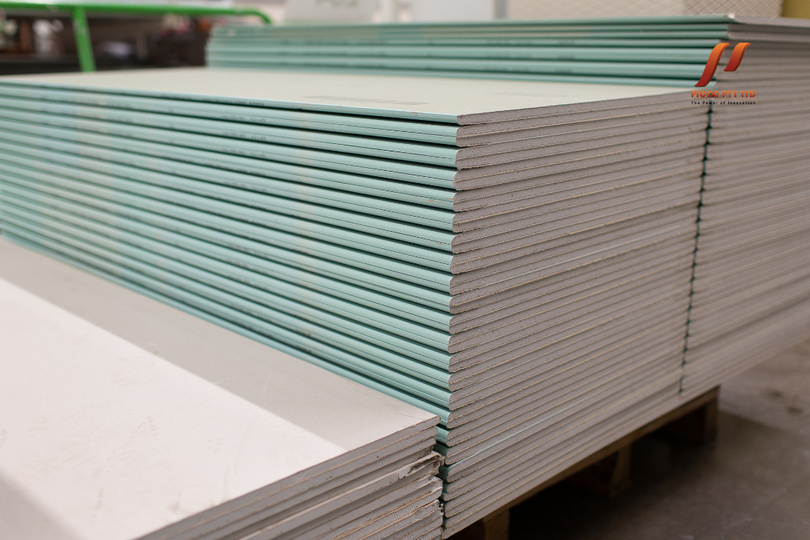
Plasterboard is commonly used to line internal walls and ceilings. It consists of a gypsum core covered with paper or a specialised facing material.
Standard plasterboard is suitable for dry internal areas such as bedrooms, living rooms, and hallways. Moisture-resistant products are designed for bathrooms, laundries, and kitchens, while fire-rated and acoustic boards are used where improved performance is required.
Plasterboard is relatively lightweight and easy to cut using a utility knife. However, creating a smooth finished surface requires careful installation, jointing, sanding, and painting.
Sheets should be supported by correctly spaced framing and fixed with suitable screws. Joints should be staggered where possible, and the fasteners should be set slightly below the surface without damaging the paper.
The most difficult part for many DIY builders is finishing the joints. Joint tape and compound need to be applied in several thin layers, with each layer feathered wider than the previous one.
Using the correct plasterboard type is important. Standard board should not be installed in areas exposed to regular moisture, and plasterboard should never be used as a substitute for a proper waterproofing system.
Plywood and Engineered Wood Panels
Plywood, oriented strand board, particleboard, and medium-density fibreboard are widely used in DIY construction.
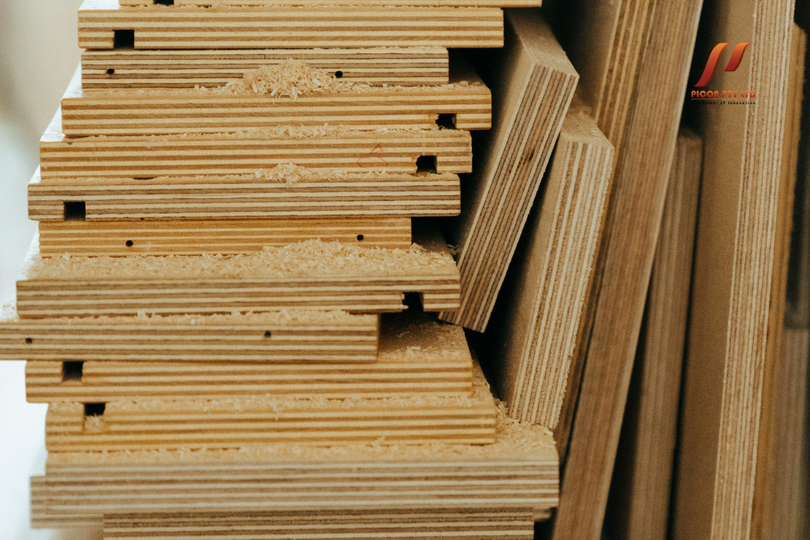
Plywood is made from thin timber veneers bonded in alternating directions. This gives it good strength and dimensional stability. It is commonly used for flooring, wall bracing, cabinets, furniture, formwork, and structural sheathing.
Oriented strand board is manufactured from wood strands bonded together in layers. It is often used for sheathing, floors, and prefabricated construction.
Particleboard and medium-density fibreboard are frequently used for indoor furniture, shelving, cabinets, and decorative panels. They provide smooth and consistent surfaces but generally do not perform well when exposed to water unless they are specifically manufactured for moisture resistance.
Panel thickness, structural rating, adhesive type, and exposure classification should all be checked before purchase.
Edges are often the most vulnerable areas, particularly with particleboard and fibreboard. Sealing cut edges can help reduce moisture absorption and improve durability.
Fibre Cement
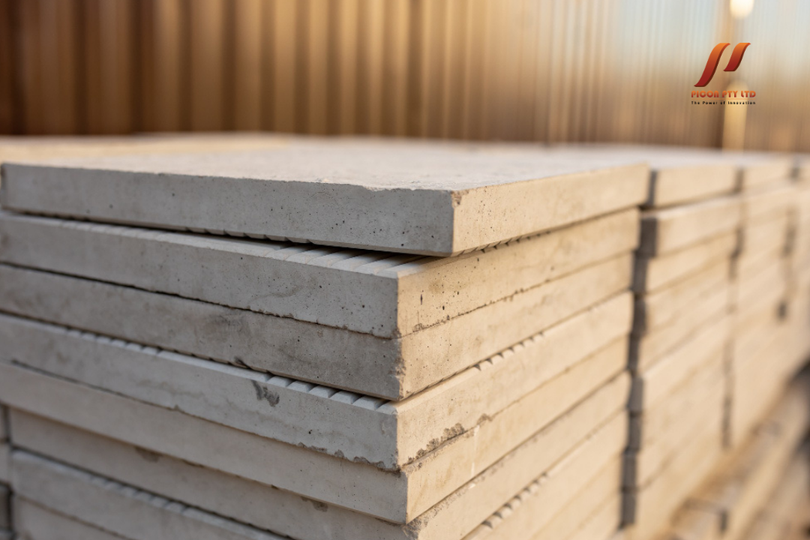
Fibre cement is made from cement, cellulose fibres, sand, and other additives. It is available as sheets, boards, planks, and decorative cladding panels.
DIY builders may use fibre cement for external cladding, eaves, wet-area linings, flooring substrates, fences, and feature walls.
It provides good resistance to moisture, termites, rot, and fire. It is also more stable than natural timber in changing weather conditions.
However, fibre cement is heavier and more brittle than some other sheet materials. It must be supported properly when carried and cut to prevent cracking or broken corners.
The material also produces fine dust during cutting, so appropriate tools, dust extraction, and personal protective equipment are essential. Many manufacturers recommend score-and-snap tools, shears, or specialised low-dust saws.
Fixing locations, joint spacing, sealants, and coatings should follow the product instructions. Fibre cement can provide excellent long-term performance when installed correctly.
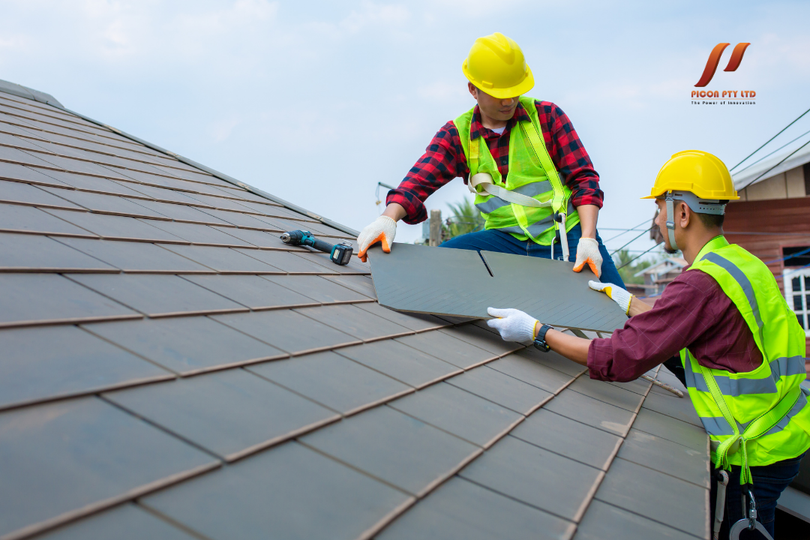
Roofing Materials
Small DIY structures such as sheds, pergolas, patios, and carports require suitable roofing materials.
Common options include steel sheets, polycarbonate panels, asphalt shingles, and lightweight composite roofing products.
Steel roofing is durable, lightweight, and suitable for many Australian conditions. It must be installed with the correct overlap, screws, flashings, and roof pitch to prevent leaks.
Polycarbonate sheets allow natural light to enter covered outdoor areas. They are lightweight and easy to handle, but the sheets must be installed with room for thermal expansion. Incorrect drilling or overtightened fixings can cause cracking.
Roof pitch is critical because every roofing system has a minimum slope required for proper drainage. A roof that is too flat may allow water to travel beneath overlaps or collect in low areas.
Roof work also involves serious fall risks. Even small structures should be planned carefully, and professional installation may be the safer option where access is difficult or the roof is high.
Read more: Roofing Materials Guide: Choosing the Best Option for Your Home
Insulation Materials
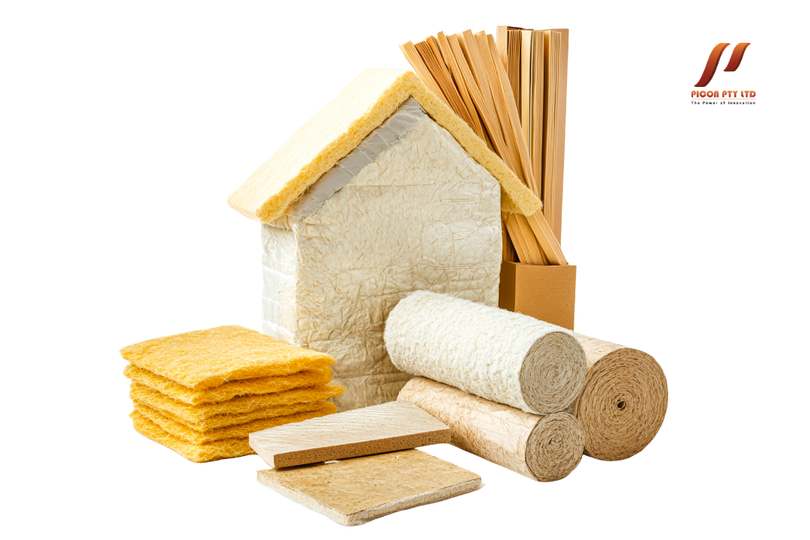
Insulation improves indoor comfort by reducing heat transfer through walls, ceilings, roofs, and floors.
Common insulation materials include glass wool batts, polyester batts, rigid foam boards, reflective foil products, and composite insulated panels.
Different products are rated according to their thermal resistance, commonly known as the R-value. A higher R-value generally provides greater resistance to heat flow.
The correct product depends on the climate, building design, available cavity depth, and location within the structure.
Insulation should fit neatly without large gaps, compression, or damage. Gaps can significantly reduce overall performance, while compressed insulation may not achieve its stated R-value.
Reflective products require appropriate air spaces to perform correctly. They should not be installed simply as an extra layer without following the manufacturer’s system requirements.
Care must also be taken around electrical wiring, downlights, vents, and heat-producing equipment.
Read more: Insulation Materials Guide for Better Energy Efficiency
Waterproofing Materials
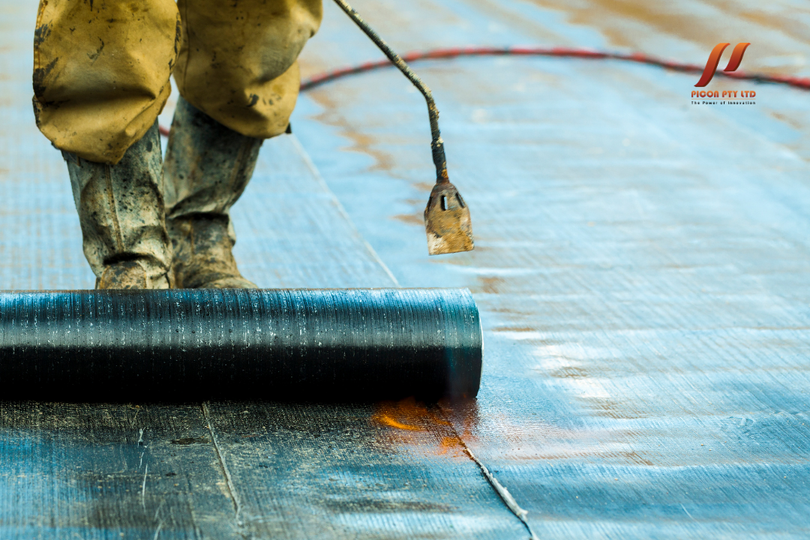
Waterproofing is critical in bathrooms, laundries, balconies, roofs, retaining walls, and other areas regularly exposed to moisture.
Common products include liquid membranes, sheet membranes, sealants, primers, waterproof tapes, and cement-based coatings.
Waterproofing should be treated as a complete system rather than a single coating. Surface preparation, corner detailing, penetrations, drainage, membrane thickness, curing time, and compatibility with finishes all affect the final result.
DIY waterproofing may appear straightforward, but mistakes are often hidden beneath tiles or other finishes. A small defect can lead to serious water damage over time.
In many Australian jurisdictions, waterproofing work must meet specific building standards and may need to be completed or certified by a qualified professional.
Before starting, check the requirements that apply to your project and location.
Read more: Waterproofing Guide for Australian Homes
Fasteners, Adhesives and Sealants
Even the best building materials can fail if they are installed using the wrong fasteners, adhesives, or sealants.
Screws, nails, bolts, anchors, brackets, and connectors should be selected according to the material, load, and environment.
Outdoor fixings require suitable corrosion resistance. Using untreated steel screws with treated timber, galvanised products, or coastal structures may result in premature corrosion.
Adhesives must be compatible with both surfaces. Some products are designed for timber, while others are made for concrete, metal, tiles, panels, or plastic.
Sealants are used around joints, windows, doors, penetrations, wet areas, and external cladding. Silicone, polyurethane, acrylic, and hybrid sealants all have different movement, adhesion, painting, and weather-resistance properties.
Always check whether the product is suitable for indoor or outdoor use and whether it can be painted after curing.
Consider the Australian Climate
Australia’s climate varies widely, and building materials that perform well in one location may be unsuitable in another.
Coastal regions require products that resist salt-related corrosion. Tropical areas need strong moisture, mould, and termite resistance. Hot inland locations place greater demands on thermal movement and ultraviolet resistance.
Bushfire-prone areas may require non-combustible materials, ember-resistant construction details, and products that meet specific bushfire attack level requirements.
Heavy rainfall areas need effective drainage, waterproofing, flashing, and weather-resistant external finishes.
Local conditions should always influence your material choice. Selecting products designed for the environment will reduce maintenance and improve service life.
Understand Material Compatibility
Building materials do not function independently. They form part of a complete system, and incompatible products can lead to failure.
Different metals may react when they come into contact with each other, especially in the presence of moisture. Some treated timbers require specially coated fasteners.
Certain sealants may not bond properly to painted, dusty, oily, or porous surfaces without a primer.
Materials also expand and contract at different rates. Long steel sheets, composite decking, plastic panels, and timber boards all need suitable movement gaps.
Checking compatibility before installation is much easier than repairing damage later.
Measure Carefully and Allow for Waste
Accurate measurements help reduce cost and prevent project delays.
Before ordering building materials, prepare a clear drawing showing the key dimensions. Measure each area more than once and calculate the number of sheets, boards, blocks, or lengths required.
Most projects should include a small waste allowance for cuts, damage, mistakes, and material defects. The correct allowance depends on the material and layout. Complex patterns and angled cuts generally produce more waste than simple rectangular installations.
Buying too little may cause delays or colour differences between product batches. Buying far too much creates unnecessary cost and storage problems.
For visible finishes, it can be helpful to purchase all materials from the same batch to improve consistency.
Balance Upfront Price and Long-Term Value
The cheapest material is not always the most economical option.
A low-cost product may require more maintenance, have a shorter lifespan, or be harder to install. A higher-quality material may cost more initially but provide better durability, appearance, and performance over time.
Consider the full project cost, including fasteners, coatings, tools, transport, labour, repairs, and future maintenance.
Materials that are easy to install may also reduce mistakes and save time, which is particularly valuable for DIY builders.
Choose materials that match the importance and expected life of the project rather than focusing only on the purchase price.
Know When to Ask for Professional Help
DIY construction can be a good way to develop skills and reduce labour costs, but some work should be completed by qualified professionals.
Structural alterations, major concrete work, electrical systems, plumbing, gas work, roofing, waterproofing, and load-bearing construction may require licences, approvals, inspections, or engineering.
Even when you plan to complete most of the work yourself, professional advice at the design stage can prevent expensive mistakes.
Material suppliers can also provide useful technical information about product selection, handling, installation, and compatibility.
Knowing when to ask for help is part of completing a safe and successful DIY project.
Choosing a Reliable Building Materials Supplier
A good supplier provides more than products. They can help you compare options, understand technical requirements, estimate quantities, and choose compatible accessories.
Look for suppliers that provide clear product information, recognised brands, installation guidance, and materials suited to Australian construction conditions.
Product availability is also important. Buying from a reliable supplier makes it easier to obtain extra materials or matching components if the project changes.
Before ordering, check delivery requirements, storage conditions, lead times, and return policies.
Working with a trusted supplier can make the entire DIY process more efficient and reduce uncertainty.
Final Thoughts
Choosing the right building materials is one of the most important steps in any DIY construction project. Timber, steel, concrete, plasterboard, masonry, fibre cement, insulation, roofing, and waterproofing products all have different strengths and limitations.
The best material depends on the project’s location, purpose, load, exposure, appearance, budget, and expected lifespan.
DIY builders should take time to understand product ratings, treatment levels, environmental suitability, installation requirements, and compatibility with surrounding materials.
Good planning also includes accurate measurements, a reasonable waste allowance, correct fasteners, and suitable tools.
By selecting quality building materials and following the manufacturer’s instructions, DIY builders can create projects that are safer, more attractive, and more durable.
A successful DIY build is not simply about completing the work yourself. It is about making informed decisions, recognising your limits, and using materials that are appropriate for the job.
Find Quality Building Materials with Picon
Every successful DIY project begins with dependable materials and practical planning.
At Picon, we supply building materials and construction solutions for residential, commercial, and prefabricated projects. Whether you are working with steel, insulation, cladding, roofing, timber products, composite systems, or other construction materials, our team can help you explore suitable options for your project.
Contact Picon to discuss your requirements and find reliable building materials designed for durability, efficiency, and Australian construction conditions.